
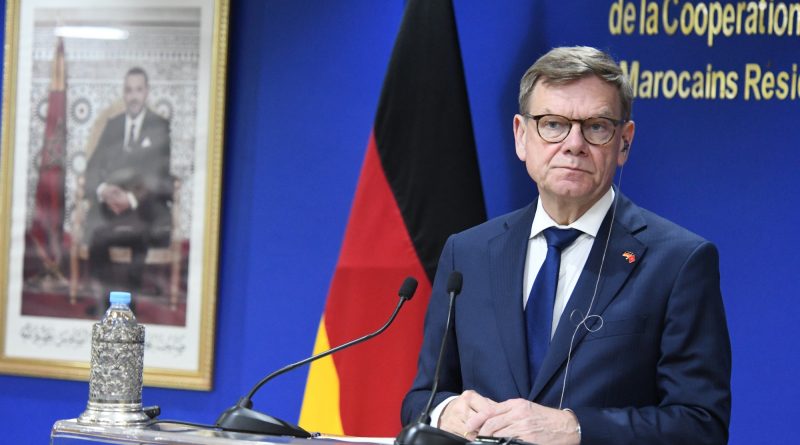
“The Time Has Come to Sit at the Negotiating Table”: German Foreign Minister Addresses Putin Directly
In a significant diplomatic development, Germany’s Foreign Minister Johann Wadephul has issued a direct appeal to Russian President Vladimir Putin, urging an immediate return to peace negotiations over the ongoing conflict in Ukraine. The senior German official emphasized that the moment for dialogue has arrived and that continued military escalation serves no constructive purpose for any party involved in the crisis. This appeal marks a notable shift in tone from Berlin, which has maintained a firm stance against Russian aggression while supporting Ukraine with military and financial assistance throughout the conflict.
Wadephul’s statement carries particular weight given Germany’s position as Europe’s largest economy and a key member of NATO. The Foreign Minister specifically insisted that European nations must have a seat at any future peace negotiations, reflecting growing concerns among EU member states that discussions about the continent’s security architecture should not proceed without their direct involvement. This position comes amid speculation about potential bilateral talks between Washington and Moscow, which has raised alarm bells across European capitals about being sidelined in decisions that will fundamentally affect their security interests.
The call for negotiations comes at a critical juncture in the conflict, which began with Russia’s full-scale invasion of Ukraine in February 2022. The war has resulted in tens of thousands of casualties on both sides, displaced millions of Ukrainian civilians, and caused widespread destruction of infrastructure across the country. European nations have collectively provided hundreds of billions of euros in military, financial, and humanitarian assistance to Ukraine, making them significant stakeholders in any potential resolution. Germany alone has committed over 28 billion euros in support, transforming its traditionally cautious foreign policy approach into one of active military assistance.
The emphasis on European participation in peace talks reflects a broader anxiety within the European Union about maintaining strategic autonomy in international affairs. Since the war began, European leaders have grappled with questions about their dependence on American security guarantees and their ability to influence outcomes in their immediate neighborhood. French President Emmanuel Macron has repeatedly called for Europe to develop its own defense capabilities and diplomatic voice, a sentiment that appears to be gaining traction in Berlin as well. The potential for negotiations that exclude European voices has galvanized discussions about the continent’s role in shaping its own security future.
Historical context adds weight to Germany’s diplomatic intervention. The country has long maintained a complex relationship with Russia, balancing economic interests, particularly in energy trade, with security concerns stemming from the Cold War era. The Nord Stream pipeline controversy and Germany’s subsequent pivot away from Russian energy dependence marked a fundamental transformation in this relationship. Chancellor Olaf Scholz’s government declared a “Zeitenwende” or turning point in German foreign policy following the invasion, committing to significant increases in defense spending and a more assertive international posture. Wadephul’s appeal represents a continuation of this evolved approach, seeking diplomatic solutions while maintaining pressure on Moscow.
The timing of this diplomatic outreach coincides with shifting dynamics on the battlefield and in international politics. Reports of battlefield fatigue on both sides, combined with economic pressures from prolonged conflict and Western sanctions, have created what some analysts view as a potential window for negotiations. However, significant obstacles remain, including fundamental disagreements over territorial integrity, security guarantees, and accountability for war crimes. Ukrainian President Volodymyr Zelensky has consistently maintained that any peace agreement must respect his country’s sovereignty and territorial integrity, positions that remain far from Russian demands.
International observers have offered mixed reactions to the German initiative. Some diplomatic experts view the appeal as a pragmatic recognition that military solutions alone cannot resolve the conflict, while others caution against appearing to offer Putin an off-ramp without sufficient guarantees for Ukraine’s future security. The involvement of European nations in negotiations could potentially provide additional leverage and legitimacy to any agreement, while also ensuring that the continent’s security interests are adequately addressed. As winter approaches and energy concerns continue to affect European economies, the pressure for diplomatic progress is likely to intensify, making Wadephul’s appeal particularly timely and significant for the future of European security.