
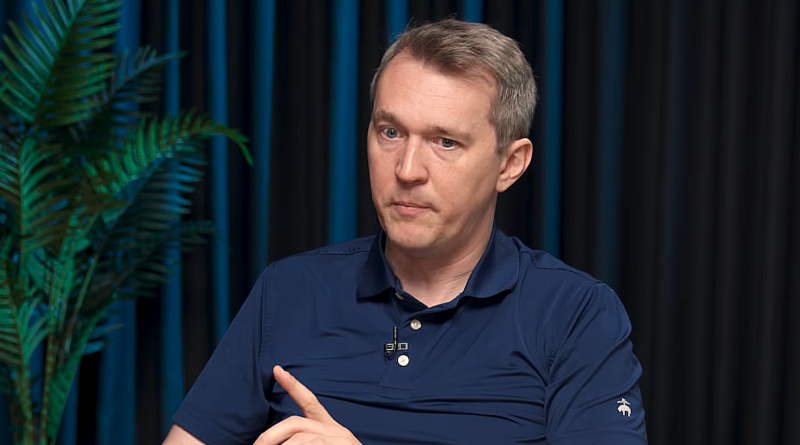
Head of Public Council at Defense Ministry: Virtually Every Commander-in-Chief Has ‘Devoured’ Defense Ministers
The complex relationship between military commanders and civilian defense ministers has once again come into focus in Russia, as Yuri Gudymenko, head of the Public Council under the Ministry of Defense, made striking remarks about the institutional dynamics that have historically defined the country’s defense establishment. According to Gudymenko, in the consciousness of both the public and state leadership, the army typically stands higher than the Ministry of Defense itself — not the other way around.
This observation touches upon a fundamental tension that exists in many countries’ defense structures: the balance of power between uniformed military leadership and civilian oversight. Gudymenko’s assertion that “virtually every commander-in-chief has ‘devoured’ the defense minister” speaks to a pattern where the prestige, authority, and public trust vested in top military commanders often overshadows the institutional power of the ministerial position designed to provide civilian control over the armed forces.
The phenomenon Gudymenko describes has deep historical roots in Russia and the Soviet Union. Throughout the 20th century, military commanders who achieved significant victories or demonstrated exceptional leadership often accumulated enormous political capital. During World War II, figures like Marshal Georgy Zhukov became national heroes whose influence extended far beyond purely military matters. This historical pattern established a precedent where successful generals were seen as the true embodiment of national defense, while ministers were viewed more as administrative figures.
In modern Russia, the relationship between defense ministers and military commanders has undergone several transformations. The post-Soviet era saw various attempts to reform the military and establish clearer lines of authority. However, the cultural and institutional legacy of prioritizing combat leadership over bureaucratic management has persisted. Defense ministers have frequently found themselves navigating complex relationships with powerful generals who command not only troops but also significant respect within the political establishment and among the general public.
The structure of defense governance in Russia places the Ministry of Defense in a unique position. While the minister is responsible for administrative oversight, budget management, and policy implementation, the actual conduct of military operations and the loyalty of troops naturally gravitates toward commanding officers. This creates an inherent tension where institutional authority may not align with practical influence. Gudymenko’s comments suggest that this imbalance has been a consistent feature of Russian defense politics, regardless of which individuals have occupied these positions.
International observers have long studied civil-military relations as a crucial indicator of political stability and governance effectiveness. In many Western democracies, significant effort has been invested in ensuring civilian control over the military remains paramount. The Russian model, as described by Gudymenko, appears to operate differently, with military prestige often trumping ministerial authority in the public consciousness. This dynamic can have significant implications for defense policy, military reform efforts, and the overall direction of national security strategy.
The timing of Gudymenko’s remarks comes amid ongoing discussions about military effectiveness and organizational structure within Russia’s defense establishment. As geopolitical tensions continue and military operations demand sustained attention, the question of who truly holds influence over defense matters becomes increasingly relevant. Whether future reforms might address the imbalance Gudymenko describes, or whether the traditional supremacy of military commanders over ministerial authority will continue, remains an open question with significant implications for Russia’s defense posture in the years ahead.