
Trump Appoints New U.S. Intelligence Chief with No Prior Experience in Intelligence Services
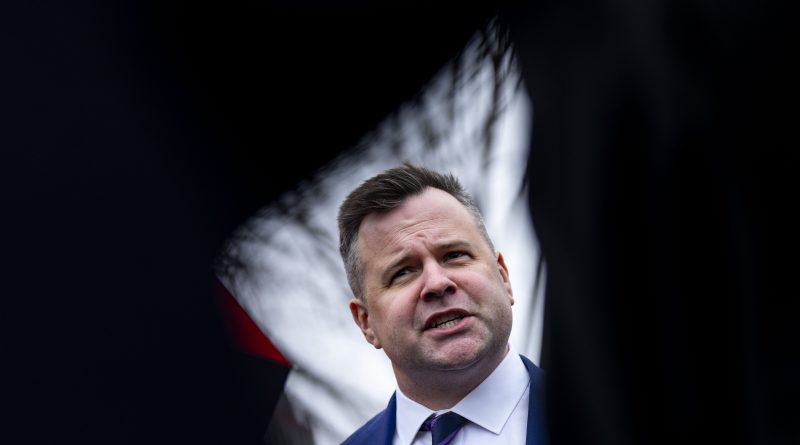
In a move that has sparked considerable debate across Washington’s political establishment, President Donald Trump has announced the appointment of Bill Pulte as the new head of United States intelligence operations. The nomination has drawn immediate attention and criticism due to Pulte’s complete lack of experience within the intelligence community, breaking with decades of tradition that has typically seen career intelligence professionals or seasoned national security experts assume leadership of America’s sprawling spy agencies.
Bill Pulte has gained public recognition primarily through his philanthropic activities on social media and his involvement in initiating investigations into alleged mortgage fraud schemes. Notably, several of these fraud investigations have targeted political opponents of Donald Trump, raising questions about the potential politicization of intelligence functions under his leadership. Pulte is the grandson of William Pulte, founder of PulteGroup, one of America’s largest homebuilding companies, and has leveraged his family wealth and social media presence to build a public profile distinct from traditional intelligence or government service.
The Office of the Director of National Intelligence, which Pulte is expected to lead, was established in 2004 following the September 11 terrorist attacks and the subsequent recommendations of the 9/11 Commission. The position was created to coordinate the efforts of the seventeen agencies that comprise the U.S. Intelligence Community, including the Central Intelligence Agency, the National Security Agency, the Federal Bureau of Investigation’s intelligence division, and military intelligence branches. Previous directors have typically possessed extensive backgrounds in military intelligence, diplomatic service, or careers within the intelligence agencies themselves.
Critics of the appointment have expressed deep concern about placing someone without intelligence experience at the helm of an organization responsible for synthesizing threat assessments, coordinating counterterrorism efforts, and briefing the President on matters of national security. Former intelligence officials, speaking on condition of anonymity, have warned that the learning curve for such a complex role could prove dangerous during a period of heightened global tensions. The intelligence community currently faces challenges including monitoring Russian military activities, tracking Chinese technological espionage, assessing threats from Iran and North Korea, and combating domestic terrorism.
Supporters of President Trump’s decision argue that bringing in an outsider could help reform what they characterize as a bloated and politically biased intelligence bureaucracy. Throughout his political career, Trump has frequently clashed with intelligence agencies, famously questioning their assessments on Russian election interference and accusing elements within the intelligence community of working against his administration. The appointment of Pulte appears consistent with Trump’s broader strategy of installing loyalists in key positions who will implement his vision without the institutional resistance he has previously encountered.
The historical precedent for politically-aligned intelligence leadership is mixed. While some directors with political backgrounds have successfully managed the intelligence community, others have faced criticism for allowing political considerations to influence intelligence assessments. The most infamous example remains the intelligence failures preceding the Iraq War, when critics alleged that political pressure led to flawed assessments about weapons of mass destruction. Intelligence professionals emphasize that maintaining analytical independence from political influence is essential to providing accurate, unbiased information to policymakers.
The nomination must still receive Senate confirmation, where Pulte is expected to face intensive questioning about his qualifications, his views on intelligence tradecraft, and his plans for managing relationships with allied intelligence services. The Five Eyes alliance, comprising the United States, United Kingdom, Canada, Australia, and New Zealand, represents one of the most important intelligence-sharing partnerships in the world, and allied nations will be watching closely to assess whether American intelligence leadership remains stable and reliable. As Washington prepares for what promises to be contentious confirmation hearings, the appointment has reignited broader debates about the proper relationship between political leadership and the professional intelligence services that inform critical national security decisions.