
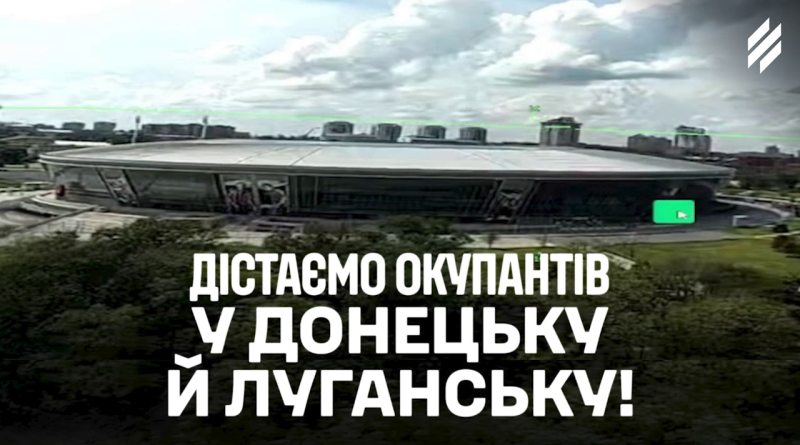
“Returning to Where We Haven’t Been Since 2014”: Ukrainian Drone Reaches Donbass Arena in Symbolic Strike
In a development laden with both military and symbolic significance, Ukraine’s Third Assault Brigade has released footage showing a drone strike mission reaching the iconic Donbass Arena in occupied Donetsk. The operation, announced through the brigade’s official channels associated with commander Andriy Biletsky, targeted Russian logistics infrastructure in the eastern sector of the ongoing conflict. The accompanying message carried a powerful statement: “We are returning to where we haven’t been since 2014,” referencing the year when Russian-backed separatists seized control of the Donetsk region.
The Donbass Arena, once a proud symbol of Ukrainian football achievement, holds particular emotional weight in this conflict. The $400 million stadium was built between 2006 and 2009 to serve as the home ground for FC Shakhtar Donetsk, one of Ukraine’s most successful football clubs. Designed by the British architectural firm ArupSport, the 52,000-seat venue hosted matches during the UEFA Euro 2012 championship, which Ukraine co-hosted with Poland. The stadium represented the aspirations of the Donbas region and its industrial heartland, making its current status under Russian occupation a painful reminder of the territorial losses Ukraine has suffered.
Since the outbreak of conflict in 2014, when Russian-backed forces took control of large parts of Donetsk and Luhansk oblasts, Shakhtar Donetsk has been forced to play its home matches in various Ukrainian cities, including Lviv, Kharkiv, and Kyiv. The club has become a symbol of Ukrainian resilience in exile, continuing to compete in domestic and European competitions while its home stadium sits unused and deteriorating. The arena has reportedly suffered damage during the years of conflict, though its exact current condition remains difficult to verify due to limited access to the occupied territories.
The Third Assault Brigade, known for its combat effectiveness on some of the most challenging frontlines, has been actively engaged in disrupting Russian supply lines and logistics networks. Drone warfare has become a defining feature of this conflict, with both sides employing unmanned aerial vehicles for reconnaissance, precision strikes, and psychological operations. Ukrainian forces have demonstrated particular innovation in adapting commercial drones for military purposes and developing indigenous drone production capabilities, partially offsetting Russia’s advantages in conventional artillery and aircraft.
The strike on logistics infrastructure near the Donbass Arena reflects Ukraine’s broader strategy of targeting Russian supply chains rather than engaging in costly frontal assaults. Military analysts have noted that disrupting logistics – including ammunition depots, fuel supplies, and command posts – can significantly degrade an occupying force’s combat effectiveness without requiring the same level of casualties that direct territorial assaults would demand. The eastern front, particularly around Donetsk city, has seen some of the war’s most intense fighting, with Russian forces attempting to expand control while Ukrainian defenders work to hold existing positions and conduct counteroffensive operations where possible.
The symbolic dimension of this operation cannot be understated. For many Ukrainians, the Donbass Arena represents not just a sports venue but a marker of normalcy, prosperity, and national pride that was shattered by the 2014 Russian intervention. The stadium hosted joyful crowds during Euro 2012, when Donetsk welcomed fans from across Europe. The contrast between those memories and the current reality of occupation underscores the human cost of the conflict. By highlighting this strike, the Third Assault Brigade appears to be sending a message both to domestic audiences and to Russian occupiers: Ukraine has not forgotten its eastern territories and maintains the capability to reach deep into occupied areas.
The ongoing conflict in eastern Ukraine has now stretched across more than a decade if counting from the initial 2014 seizure of Crimea and parts of Donbas, and more than three years since Russia’s full-scale invasion in February 2022. Throughout this period, the question of Ukraine’s eastern territories has remained central to any discussion of potential peace negotiations. Ukrainian officials have consistently maintained that territorial integrity is non-negotiable, while the strikes demonstrated in this latest footage suggest that military pressure on occupied areas will continue as part of Ukraine’s strategy to eventually restore control over its internationally recognized borders.