
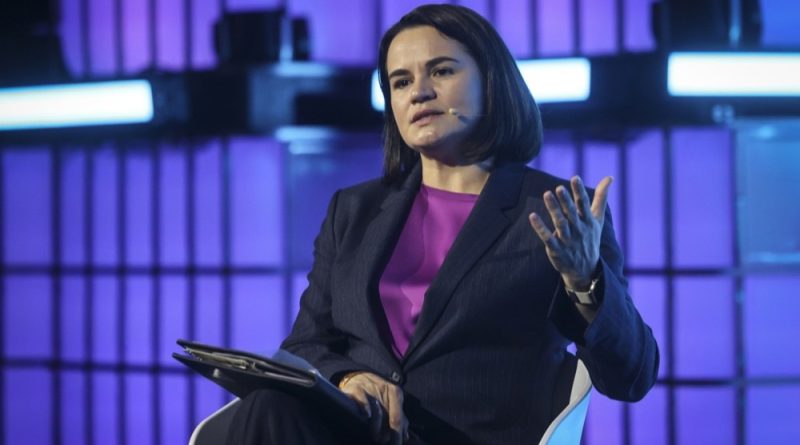
Trump Administration Informs Belarusian Opposition Leader of Pause in Prisoner Negotiations with Lukashenko
The administration of U.S. President Donald Trump has informed Belarusian opposition leader Sviatlana Tsikhanouskaya that negotiations with the regime of Alexander Lukashenko regarding the release of political prisoners have been temporarily suspended. According to Reuters, this development marks a significant shift in diplomatic efforts to secure the freedom of hundreds of individuals detained in Belarus for their political activities and opposition to the current government.
Human rights organizations estimate that approximately 870 political prisoners remain incarcerated in Belarusian prisons as of now. These detainees include journalists, activists, former presidential candidates, and ordinary citizens who participated in mass protests that erupted following the disputed 2020 presidential election. The arrests have been widely condemned by international human rights groups and Western governments as politically motivated persecution designed to silence dissent and maintain Lukashenko’s grip on power.
The 2020 presidential election in Belarus triggered the largest civil unrest in the country’s post-Soviet history. Tsikhanouskaya, who ran against Lukashenko after her husband Sergei Tikhanovsky was imprisoned for his activism, was widely believed by opposition supporters and Western observers to have won the election. Official results, however, declared Lukashenko the winner with approximately 80 percent of the vote—a figure that sparked immediate allegations of massive electoral fraud. The subsequent protests drew hundreds of thousands of Belarusians to the streets, demanding fair elections and an end to Lukashenko’s 26-year rule.
The Belarusian government responded to the demonstrations with a severe crackdown that drew international condemnation. Security forces arrested thousands of protesters, with many reporting torture and abuse while in custody. Independent media outlets were shut down, and prominent opposition figures were either imprisoned or forced into exile. Tsikhanouskaya herself fled to Lithuania, where she has continued to lead the democratic opposition movement from abroad and lobby Western governments for support.
The Trump administration’s engagement with the Lukashenko regime on the prisoner issue represents a departure from the approach taken during the Biden presidency, which focused primarily on sanctions and diplomatic isolation. The decision to pursue direct negotiations raised eyebrows among some foreign policy analysts, given Lukashenko’s close alliance with Russian President Vladimir Putin, particularly since Belarus allowed Russian forces to use its territory as a staging ground for the 2022 invasion of Ukraine. Critics have questioned whether meaningful concessions could be extracted from Minsk without addressing the broader geopolitical context.
The pause in negotiations comes at a particularly sensitive time for political prisoners in Belarus. Human rights groups have documented deteriorating conditions in Belarusian prisons, with many detainees denied adequate medical care, access to lawyers, and contact with family members. Several high-profile prisoners have reported serious health problems, leading to urgent international appeals for their release on humanitarian grounds. The Viasna Human Rights Center, whose founder Ales Bialiatski received the Nobel Peace Prize in 2022 while imprisoned, has been tracking cases and advocating for prisoner releases.
Tsikhanouskaya has consistently called on Western leaders to prioritize the release of political prisoners in any engagement with the Lukashenko regime. She has argued that the international community must not normalize relations with Minsk while hundreds of innocent people remain behind bars for exercising their fundamental rights. The opposition leader has also warned against providing the regime with any sanctions relief without concrete steps toward democratization and the liberation of all political detainees. The pause in negotiations leaves uncertain the fate of those still imprisoned and raises questions about the future direction of U.S. policy toward Belarus under the current administration.