
Trade Simplification and €50 Million Financial Aid: European Union Backs Armenia Ahead of Elections
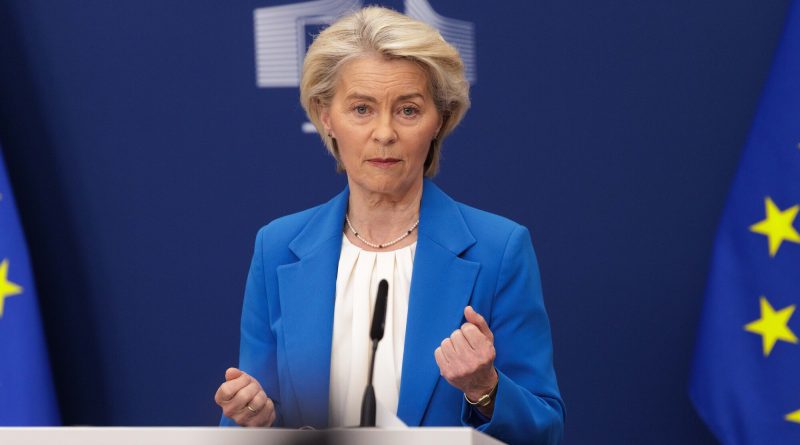
In a significant display of support for the South Caucasus nation, European Commission President Ursula von der Leyen announced a comprehensive aid package for Armenia during her official visit to Yerevan. The timing of this announcement, coming just ahead of crucial parliamentary elections in the country, underscores the European Union’s deepening commitment to strengthening ties with Armenia and supporting its democratic trajectory. Von der Leyen’s visit marks another milestone in the rapidly evolving relationship between Brussels and Yerevan, which has accelerated dramatically in recent years.
The aid package includes €50 million in direct financial assistance aimed at bolstering Armenia’s economy and supporting various development initiatives. Additionally, the European Union has committed to simplifying trade procedures between the bloc and Armenia, a move that could significantly boost the country’s export capabilities and attract foreign investment. These measures are designed to help Armenia diversify its economic partnerships and reduce its historical dependence on Russian markets, which have dominated the country’s trade relations for decades.
During her press conference in Yerevan, von der Leyen did not mince words regarding Russia’s intentions toward Armenia. The European Commission President stated explicitly that Moscow seeks to use Armenia for its own geopolitical purposes, warning against the Kremlin’s influence in the region. This direct criticism of Russia reflects the increasingly tense relationship between the EU and Moscow, particularly in the context of the ongoing conflict in Ukraine and Russia’s broader efforts to maintain influence in post-Soviet states. The statement also acknowledges the difficult position Armenia finds itself in, caught between its traditional security alliance with Russia and its aspirations for closer European integration.
Armenia’s pivot toward the West has been accelerating since the 2020 Nagorno-Karabakh war, in which Azerbaijan recaptured significant territories with Turkish support while Russia’s response was perceived by many Armenians as inadequate despite the existing security alliance. The subsequent 2023 Azerbaijani military operation that effectively ended Armenian control over Nagorno-Karabakh further strained Armenian-Russian relations. Many in Armenia questioned the value of the Collective Security Treaty Organization (CSTO) membership when the alliance failed to come to Armenia’s defense during its most critical security challenges. This disillusionment has created political space for a fundamental reorientation of Armenia’s foreign policy.
The European Union’s engagement with Armenia is part of its broader Eastern Partnership initiative, which aims to strengthen ties with six post-Soviet states: Armenia, Azerbaijan, Belarus, Georgia, Moldova, and Ukraine. However, the program has seen mixed results, with Belarus now firmly in Russia’s orbit and Azerbaijan maintaining a more balanced but often contentious relationship with Brussels. Armenia’s willingness to deepen ties with the EU represents a significant opportunity for the bloc to demonstrate the benefits of European partnership. The €50 million aid package, while modest compared to support provided to Ukraine, sends a clear signal of commitment to Armenia’s development and sovereignty.
The upcoming Armenian elections add another layer of complexity to these developments. Prime Minister Nikol Pashinyan, who came to power through the 2018 Velvet Revolution promising democratic reforms and anti-corruption measures, faces a challenging political landscape. His government has been criticized by opposition forces for the territorial losses during his tenure, while supporters argue he inherited impossible security challenges and is charting a more sustainable path for Armenia’s future. The EU’s support package could be seen as an endorsement of Pashinyan’s Western-oriented policies, though European officials typically frame such assistance as support for the Armenian people rather than any particular political faction.
Trade simplification measures between the EU and Armenia could prove particularly transformative for the Armenian economy. Currently, Armenia’s primary exports include minerals, precious stones, foodstuffs, and textiles, with significant potential for growth in information technology and agricultural sectors. Easier access to European markets could help Armenian businesses scale their operations and meet EU standards, potentially qualifying the country for deeper economic integration in the future. The European Union has already signed a Comprehensive and Enhanced Partnership Agreement with Armenia in 2017, and these new measures build upon that foundation to create more tangible economic benefits for Armenian citizens.
As Armenia navigates this pivotal moment in its history, the European Union’s support represents both an opportunity and a challenge. Closer ties with Brussels will inevitably strain relations with Moscow, which continues to maintain a military base in Armenia and has historically been the country’s primary security guarantor. However, for many Armenians, the failure of Russian security guarantees has already fundamentally altered the calculus of their country’s foreign policy orientation. The coming elections will help determine whether Armenia continues on its current trajectory toward European integration or whether domestic political pressures lead to a recalibration of this approach.