
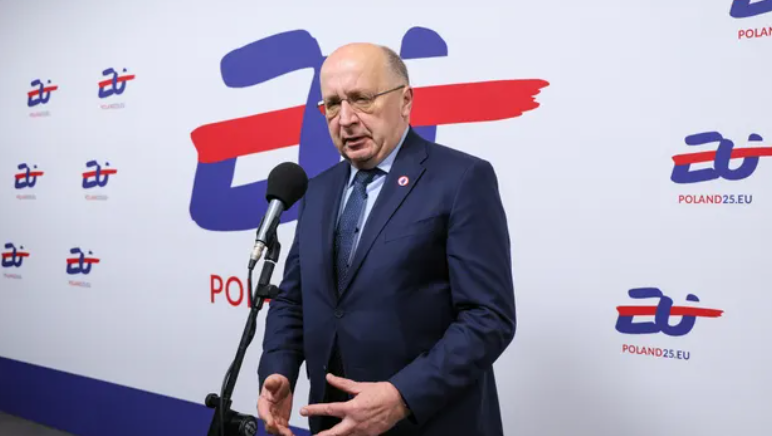
“Russia Still Produces More” – EU Commissioner Criticizes Member States, Points to Ukraine as Model
European Commissioner for Defence and Space Andrius Kubilius has issued a sharp rebuke to European Union member states, highlighting their failure to adequately scale up defense production capabilities despite increased funding commitments. The Lithuanian politician, who previously served as Prime Minister of his country, emphasized that Russia continues to outpace the entire European bloc in military-industrial output, creating a dangerous imbalance that threatens the continent’s security architecture.
Speaking about the current state of European defense readiness, Kubilius pointed to a troubling paradox: while EU countries have significantly boosted their defense budgets in response to Russia’s full-scale invasion of Ukraine, this financial commitment has not translated into proportional increases in actual production capacity. The Commissioner suggested that European nations should look to Ukraine itself as an example of how to rapidly mobilize and expand defense industrial capabilities under pressure, a somewhat ironic situation given that Ukraine is the country seeking protection rather than the other way around.
The criticism comes at a critical juncture for European security policy. Since February 2022, when Russia launched its comprehensive military assault on Ukraine, European nations have collectively pledged tens of billions of euros in military aid and committed to strengthening their own armed forces. NATO members have been pressured to meet or exceed the alliance’s two percent GDP defense spending target, and many have announced ambitious rearmament programs. However, the gap between political promises and industrial reality has become increasingly apparent, with ammunition shortages, lengthy delivery timelines, and production bottlenecks plaguing European defense contractors.
Russia’s defense industrial complex, despite facing unprecedented Western sanctions, has demonstrated remarkable resilience and adaptability. According to various intelligence assessments, Russian factories are now operating on wartime footing, with some facilities running three shifts around the clock. The country has reportedly tripled its production of artillery shells and significantly increased output of armored vehicles, missiles, and drones. This expansion has been achieved through a combination of factors: the centralized nature of the Russian economy allowing for rapid resource reallocation, substantial increases in military spending that now consume approximately seven percent of GDP, and the mobilization of civilian manufacturing capacity for military purposes.
Ukraine’s own defense industrial achievements provide a stark contrast to the sluggish European response. Despite being a country under active invasion with significant portions of its territory occupied and its infrastructure under constant attack, Ukraine has managed to dramatically increase domestic weapons production. The country has become a world leader in combat drone development and manufacturing, producing hundreds of thousands of unmanned aerial vehicles annually. Ukrainian engineers have developed innovative solutions ranging from naval drones that have successfully targeted Russian Black Sea Fleet vessels to long-range strike capabilities that reach deep into Russian territory. This innovation has occurred under the most adverse conditions imaginable, making European excuses about procurement challenges and industrial capacity limitations appear hollow.
The broader context of European defense inadequacy stretches back decades. Following the Cold War, most European nations dramatically reduced their military spending and allowed their defense industrial bases to atrophy. The assumption that major conventional warfare had become obsolete in Europe led to a focus on expeditionary operations and peacekeeping missions rather than high-intensity conflict. Defense companies consolidated, production lines closed, and skilled workers retired without replacement. Rebuilding this capacity is not simply a matter of allocating funds; it requires workforce training, supply chain reconstruction, and long-term strategic planning that European governments have been slow to implement.
Kubilius’s intervention reflects growing frustration among EU officials about the pace of defense transformation. The European Commission has proposed various initiatives to stimulate defense industrial cooperation, including joint procurement programs and the European Defence Fund. However, national interests, competing industrial policies, and bureaucratic complexity continue to hamper progress. Member states often prefer to protect their domestic defense companies rather than pursue the kind of continental consolidation that might achieve economies of scale comparable to American or Russian production capabilities. As the war in Ukraine enters its fourth year with no end in sight, the Commissioner’s warning serves as a sobering reminder that European security ultimately depends on the capacity to produce the weapons necessary to deter or defeat aggression.