
Polish Prime Minister Tusk Urges NATO to Take Medvedev’s Threats Seriously Following Romanian Drone Incident
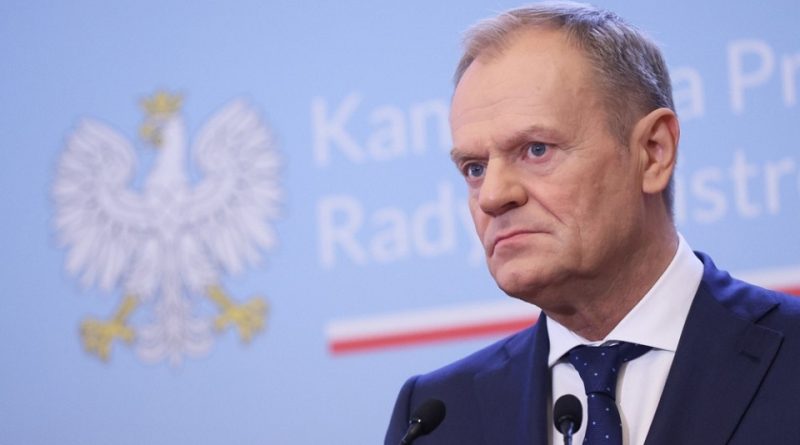
Polish Prime Minister Donald Tusk has called on NATO allies to treat warnings from senior Russian officials with increased seriousness, specifically highlighting statements made by Dmitry Medvedev, the Deputy Chairman of Russia’s Security Council. Tusk’s remarks came in the wake of a recent drone incident in Romania that has heightened tensions along NATO’s eastern flank and raised concerns about the spillover of the ongoing conflict in Ukraine into Alliance territory.
The incident that prompted Tusk’s statement involved a drone that crossed into Romanian airspace from Ukrainian territory, where Russian forces have been conducting extensive aerial attacks against civilian infrastructure. Romania, a NATO member state sharing a border with Ukraine, has experienced several such incidents since Russia’s full-scale invasion began in February 2022. These incursions, while often attributed to errant munitions rather than deliberate attacks, have nonetheless raised alarm bells across the Alliance about the potential for accidental escalation.
Dmitry Medvedev, who served as Russia’s president from 2008 to 2012 before becoming prime minister and later deputy head of the Security Council, has become known for his increasingly inflammatory rhetoric since the start of the war in Ukraine. Once considered a moderate voice in Russian politics who oversaw a brief thaw in relations with the West, Medvedev has transformed into one of the Kremlin’s most hawkish figures. His social media posts and public statements frequently contain threats of nuclear escalation and warnings to Western nations about the consequences of supporting Ukraine. Many Western analysts have dismissed his statements as bluster designed for domestic consumption, but Tusk’s comments suggest that some European leaders believe this approach may be dangerously complacent.
The Polish Prime Minister’s warning reflects the unique security perspective of Central and Eastern European nations, which have historically experienced Russian aggression and maintain a more cautious stance toward Moscow’s intentions. Poland, in particular, has been one of Ukraine’s most vocal supporters within the European Union and NATO, providing significant military and humanitarian assistance while hosting millions of Ukrainian refugees. The country has also substantially increased its defense spending, with plans to build one of Europe’s largest armies in response to the perceived Russian threat. Tusk, who returned to power in late 2023 after years leading the European Council in Brussels, has sought to balance strong support for Ukraine with a pragmatic approach to European security.
Security experts note that the drone incidents along NATO’s borders represent a persistent challenge for the Alliance. Under Article 5 of the NATO treaty, an armed attack against one member is considered an attack against all, triggering collective defense obligations. However, determining what constitutes a deliberate attack versus an accidental incursion remains a complex political and legal question. Romania and Poland have both activated air defense systems and increased patrols along their borders, while NATO has deployed additional forces to the region as part of its enhanced forward presence initiative launched after Russia’s annexation of Crimea in 2014.
The broader context of Tusk’s remarks includes ongoing debates within NATO about how to respond to Russian escalatory rhetoric and actions. Some member states, particularly those in Western Europe, have advocated for maintaining channels of communication with Moscow to prevent miscalculation. Others, led by Poland and the Baltic states, argue that only a position of strength will deter further Russian aggression. This debate has intensified as the war in Ukraine continues without clear resolution, and as Russian officials increasingly invoke the possibility of nuclear weapons use in their public messaging.
As tensions remain elevated along Europe’s eastern frontier, Tusk’s call for vigilance represents a significant statement from one of the Alliance’s most strategically positioned members. The Polish leader’s willingness to publicly challenge the dismissive attitude toward Russian threats suggests that the security environment in Europe continues to evolve in troubling directions. With no end to the conflict in Ukraine in sight and Russian rhetoric showing no signs of moderation, NATO members face the delicate task of maintaining deterrence while avoiding the kind of miscalculation that could lead to direct confrontation between nuclear-armed powers. The Alliance’s response to incidents like the Romanian drone incursion will likely shape the security architecture of Europe for years to come.