
Armenian Prime Minister Rejects Calls for Referendum on EU vs Eurasian Union Membership
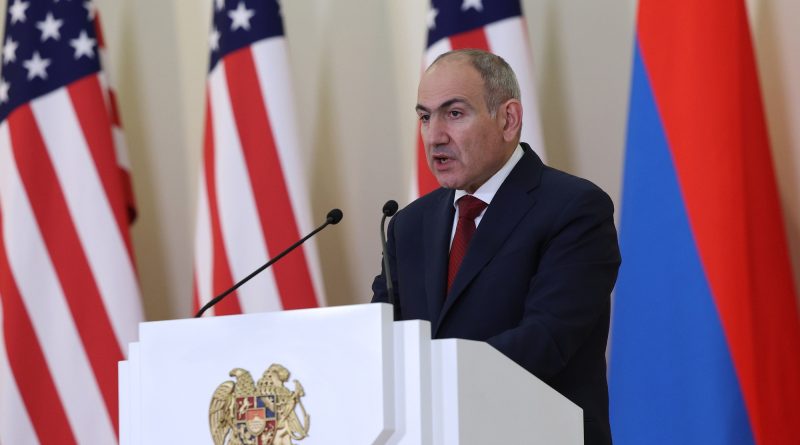
Armenian Prime Minister Nikol Pashinyan has firmly rejected proposals from fellow Eurasian Economic Union (EAEU) leaders to hold a national referendum on whether Armenia should remain in the Russia-led economic bloc or pursue European Union membership. The statement comes in response to a joint appeal from the presidents of Russia, Belarus, Kazakhstan, and Kyrgyzstan — Vladimir Putin, Alexander Lukashenko, Kassym-Jomart Tokayev, and Sadyr Japarov respectively — who called for Armenians to decide their geopolitical orientation through a popular vote.
Pashinyan stated that he sees no grounds for organizing such a referendum, emphasizing that Armenia’s current trajectory does not require citizens to make a binary choice between East and West. The Armenian leader has been increasingly critical of Russian influence in the region, particularly following what Yerevan perceives as Moscow’s failure to fulfill its security obligations during the 2020 Nagorno-Karabakh war with Azerbaijan and subsequent territorial losses. This diplomatic standoff marks a significant escalation in tensions between Armenia and its traditional allies within the post-Soviet space.
The Eurasian Economic Union, established in 2015, represents Russia’s flagship integration project aimed at creating a common economic space among former Soviet republics. Armenia joined the bloc in 2015 under former President Serzh Sargsyan, gaining access to Russian markets and energy resources at preferential rates. However, membership has also meant alignment with Russian trade policies and limitations on pursuing independent economic agreements with Western partners. The union currently includes Russia, Belarus, Kazakhstan, Kyrgyzstan, and Armenia, with a combined population of approximately 180 million people and a GDP exceeding $2 trillion.
Armenia’s relationship with the European Union has been warming considerably in recent years. In 2024, the country signed a Comprehensive and Enhanced Partnership Agreement with the EU, expanding cooperation in trade, governance, and democratic reforms without requiring full membership commitment. European officials have welcomed Armenia’s reform efforts and provided substantial financial assistance for infrastructure and institutional development. Brussels has been careful to frame its engagement with Yerevan as complementary rather than competitive with existing regional arrangements, though Moscow clearly views the rapprochement with suspicion.
The call for a referendum from EAEU leaders represents an unusual intervention in Armenian domestic affairs and reflects growing concern in Moscow about losing influence over a strategically important South Caucasus ally. Russia maintains a military base in Armenia at Gyumri and has historically served as the primary security guarantor for the small landlocked nation of approximately three million people. However, the perception that Russian peacekeepers failed to prevent Azerbaijan’s military operations in Nagorno-Karabakh has severely damaged trust in the bilateral security relationship. Many Armenians now question the value of maintaining close ties with Moscow when those ties did not translate into concrete protection during their time of need.
Political analysts suggest that Pashinyan’s refusal to hold a referendum reflects both practical and strategic considerations. A public vote on such a sensitive geopolitical question could potentially destabilize Armenian society, which remains divided on questions of foreign policy orientation. Furthermore, the framing of the choice as binary — either the EU or the EAEU — oversimplifies Armenia’s complex situation. The country shares no border with any EU member state and relies heavily on Russian energy imports and transit routes through Georgia. Complete severance of ties with the Eurasian bloc could have severe economic consequences that European partnership alone might not compensate for in the short term.
The situation also highlights broader tensions within the post-Soviet space as countries navigate between competing spheres of influence. Georgia and Moldova have both pursued EU membership aspirations despite Russian opposition, while Ukraine’s similar trajectory contributed to the devastating conflict that began in 2022. Armenia’s careful balancing act — maintaining EAEU membership while deepening European ties — represents an attempt to avoid such dramatic ruptures while gradually expanding its diplomatic options. Whether this middle path remains viable as pressure mounts from both directions remains one of the most consequential questions for South Caucasus stability in the coming years.