
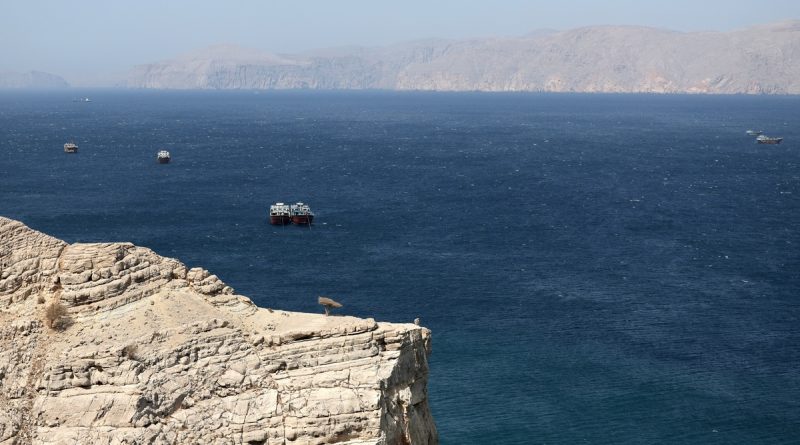
U.S. Military Quietly Escorts Nearly 70 Ships Through Strait of Hormuz in Three Weeks
The United States Navy has successfully conducted a covert operation to escort approximately 70 commercial vessels through the strategically vital Strait of Hormuz over a three-week period, according to a report by The New York Times. American military officials have stated that some of the navigation routes for these commercial ships were deliberately plotted at a safe distance from Iranian territorial waters, highlighting the ongoing tensions in one of the world’s most critical maritime chokepoints.
This operation represents a significant escalation in U.S. efforts to protect international shipping lanes in the Persian Gulf region, where Iranian naval forces and Revolutionary Guard vessels have repeatedly been accused of harassing and seizing commercial tankers. The quiet nature of the mission suggests a deliberate strategy to avoid provoking Tehran while simultaneously demonstrating American commitment to maintaining freedom of navigation in international waters.
The Strait of Hormuz holds immense strategic importance for global energy markets and international trade. This narrow waterway, only 21 miles wide at its narrowest point, serves as the gateway between the Persian Gulf and the Gulf of Oman, connecting major oil-producing nations to global markets. Approximately 20% of the world’s oil supply passes through this strait daily, making it one of the most economically significant maritime passages on Earth. Any disruption to shipping through this chokepoint could send shockwaves through global energy prices and supply chains.
Iran’s coastline dominates the northern edge of the strait, giving Tehran significant leverage over maritime traffic in the region. Over the past several years, Iranian forces have seized multiple tankers, detained crews, and conducted provocative maneuvers near commercial and military vessels. These actions have been widely interpreted as responses to U.S. economic sanctions and broader geopolitical tensions between Washington and Tehran. The Islamic Revolutionary Guard Corps Navy, which operates independently from Iran’s regular navy, has been particularly aggressive in asserting Iranian presence in these waters.
The U.S. military presence in the Gulf region has a long and complex history dating back decades. American naval forces have maintained a significant footprint in the area since the 1980s, when the so-called “Tanker War” between Iran and Iraq threatened global oil supplies. The U.S. Fifth Fleet, headquartered in Bahrain, serves as the primary American naval command responsible for operations in the Persian Gulf, Red Sea, and Arabian Sea. This latest escort operation builds upon established protocols for protecting commercial shipping while navigating the delicate diplomatic balance required in such a volatile region.
Defense analysts suggest that the decision to conduct these escorts “quietly” reflects a nuanced approach to regional security. By avoiding public announcements and media attention, the U.S. military can provide effective protection without creating opportunities for Iranian propaganda or escalatory responses. This strategy allows commercial vessels to transit safely while minimizing the risk of direct confrontation between American and Iranian forces. The routing of ships at safe distances from Iranian waters further demonstrates this cautious approach, reducing the likelihood of incidents that could spiral into larger conflicts.
The operation also comes against the backdrop of ongoing negotiations and tensions surrounding Iran’s nuclear program, regional proxy conflicts, and the broader struggle for influence in the Middle East. European allies and Asian trading partners have long urged the United States to maintain open shipping lanes through the strait, as their economies depend heavily on the uninterrupted flow of oil and goods. The successful completion of nearly 70 transits without major incident suggests that the current military strategy is achieving its immediate objectives, though the long-term sustainability of such operations remains uncertain.
Looking ahead, maritime security experts anticipate continued tensions in the region as geopolitical rivalries persist. The U.S. Navy’s ability to project power and protect commercial interests in distant waters remains a cornerstone of American foreign policy, but it also requires significant resources and careful diplomatic management. As global energy markets continue to evolve and regional dynamics shift, the Strait of Hormuz will likely remain a flashpoint where military preparedness and diplomatic finesse must work in tandem to preserve international stability and economic security.