
“We Are Completely on Ukraine’s Side”: Tsikhanouskaya Explains the Fundamental Difference Between Belarusian and Russian Opposition
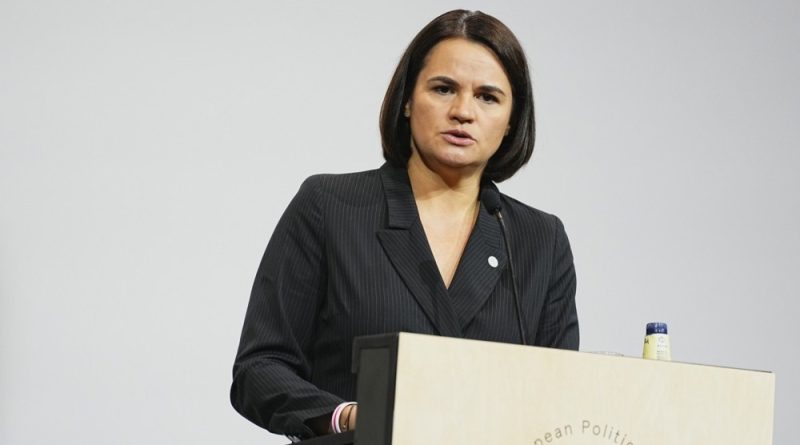
Sviatlana Tsikhanouskaya, the leader of the Belarusian democratic opposition and internationally recognized leader of democratic Belarus, has articulated a clear distinction between her movement and Russian opposition figures in a recent interview with LIGA.net. The Belarusian politician emphasized that while both groups oppose authoritarian regimes, their positions on the war in Ukraine represent a fundamental dividing line that cannot be ignored.
“We are completely on Ukraine’s side,” Tsikhanouskaya stated unequivocally, underscoring the unwavering support that the Belarusian democratic movement has shown for Ukraine since the full-scale Russian invasion began in February 2022. This position has been consistent from the earliest days of the conflict, when Belarusian territory was used as a launching pad for Russian forces attacking Kyiv, much to the horror of ordinary Belarusians who opposed Lukashenko’s complicity in the aggression.
The distinction Tsikhanouskaya draws is significant in the context of ongoing debates about how democratic nations should engage with various opposition movements from authoritarian states. While Russian opposition figures have faced criticism for ambiguous or insufficient condemnation of Russian imperialism and the war in Ukraine, the Belarusian opposition has maintained a consistently pro-Ukrainian stance. This includes supporting sanctions against the Lukashenko regime, advocating for the release of political prisoners, and actively working to document cases of Belarusians who have been persecuted for opposing the war.
Tsikhanouskaya’s journey from an ordinary citizen to the face of Belarusian democracy began in 2020 when she entered the presidential race after her husband, popular blogger Siarhei Tsikhanouski, was arrested by authorities to prevent his candidacy. What started as a campaign to free her husband transformed into a nationwide movement that saw unprecedented protests following the disputed August 2020 election. The regime’s brutal crackdown forced Tsikhanouskaya into exile in Lithuania, from where she has continued to lead the democratic opposition and maintain international pressure on the Lukashenko government.
The question of cooperation with Russian opposition has become increasingly complex since the start of the full-scale war. While Tsikhanouskaya has indicated that dialogue with Russian opposition figures occurs, she has been careful to emphasize the conditions and limitations of such interaction. The Belarusian opposition demands clear anti-war positions and recognition of Ukrainian sovereignty and territorial integrity as prerequisites for any meaningful cooperation. This stance reflects the broader sentiment among Belarusians who have witnessed their country become an unwilling accomplice in Russia’s military aggression.
Historical context adds important depth to understanding the Belarusian position. Belarus has long struggled to maintain its national identity in the shadow of Russian influence, with the Lukashenko regime increasingly dependent on Moscow for political and economic support, especially after the 2020 protests. Many Belarusians see Ukraine’s fight for independence as parallel to their own aspirations for a democratic, sovereign nation free from Russian domination. The Kastus Kalinouski Regiment, a volunteer unit of Belarusians fighting alongside Ukrainian forces, has become a powerful symbol of this solidarity, with members explicitly stating they are fighting for both Ukrainian and Belarusian freedom.
The international community has generally recognized the Belarusian democratic opposition’s clear stance on the war. Tsikhanouskaya has been received by world leaders, addressed parliaments, and has become a respected voice in discussions about Eastern European security and democratic transitions. Her emphasis on the difference between Belarusian and Russian opposition movements serves not only to clarify her movement’s values but also to guide Western policymakers in distinguishing between various anti-authoritarian forces in the region.
As the war in Ukraine continues with no end in sight, the positions taken by opposition movements from Russia’s neighboring countries carry increasing weight. Tsikhanouskaya’s clear articulation of support for Ukraine reflects a strategic and moral calculation that the future of Belarusian democracy is inextricably linked to Ukrainian victory. For the Belarusian opposition, there is no ambiguity: standing with Ukraine is both a matter of principle and a practical recognition that the defeat of Russian aggression is essential for any hope of democratic change in Belarus itself.