
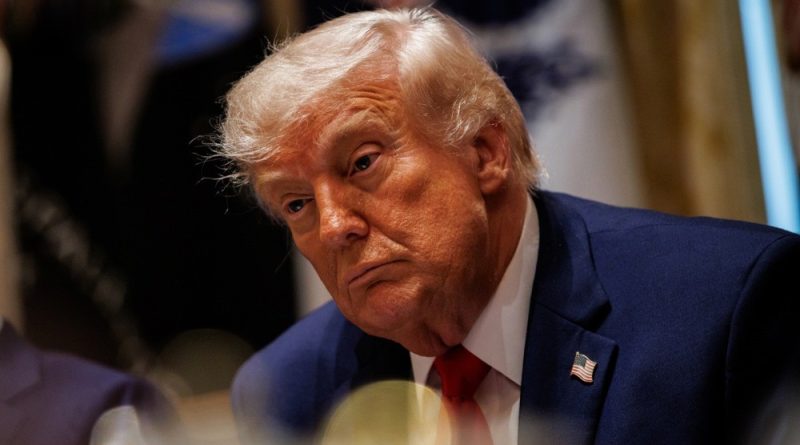
Trump Fails to Make Decision on Iran Conflict Despite Promises of Swift Resolution
After nearly two hours of deliberation in the White House Situation Room, President Donald Trump emerged without making a definitive decision on how to end the escalating conflict with Iran, according to media sources familiar with the meeting. This development stands in stark contrast to the president’s earlier public statements suggesting he would quickly resolve the crisis that has been building between Washington and Tehran for months.
The high-stakes meeting reportedly involved top national security officials, military advisors, and key members of the administration’s foreign policy team. Sources indicate that despite the lengthy discussion, no clear path forward was established, leaving the administration’s Iran strategy in a state of uncertainty. The president, who has repeatedly claimed he could broker deals that his predecessors could not, appears to be facing the complex realities of Middle Eastern diplomacy that have challenged American leaders for decades.
The tensions between the United States and Iran have deep historical roots stretching back to the 1979 Islamic Revolution, which fundamentally transformed the relationship between the two nations. Since then, successive American administrations have struggled to find effective approaches to dealing with Tehran, oscillating between diplomatic engagement and maximum pressure campaigns. The Trump administration’s withdrawal from the 2015 Iran nuclear deal, formally known as the Joint Comprehensive Plan of Action, marked a significant escalation in tensions and set the stage for the current standoff.
Under the maximum pressure campaign initiated during Trump’s first term, the United States reimposed crippling economic sanctions on Iran, targeting its oil exports and banking sector. These measures have significantly damaged the Iranian economy, contributing to inflation and unemployment, but have not achieved their stated goal of bringing Tehran to the negotiating table for a new, more comprehensive agreement. Iran has responded by gradually increasing its uranium enrichment activities, bringing its nuclear program closer to weapons-grade capability than ever before.
Military experts and foreign policy analysts have long warned that any conflict with Iran would be far more complex and costly than the administration’s rhetoric might suggest. Iran possesses a sophisticated military apparatus, including extensive missile capabilities and a network of proxy forces across the Middle East, from Hezbollah in Lebanon to various militias in Iraq and Yemen. These assets give Tehran significant capacity to retaliate against American interests and allies throughout the region, making any military engagement potentially catastrophic for regional stability.
The lack of a decisive outcome from the Situation Room meeting raises questions about the coherence of the administration’s overall strategy toward Iran. Some observers note that internal divisions within the administration between those favoring diplomatic solutions and those advocating for a harder military stance may be contributing to the policy paralysis. Meanwhile, America’s European allies, who have attempted to salvage elements of the nuclear agreement, have expressed growing frustration with Washington’s approach and its implications for transatlantic cooperation on security matters.
As the situation remains unresolved, regional stakeholders continue to watch nervously. Saudi Arabia, Israel, and the Gulf states have their own complex relationships with Iran and have been advocating for American support in containing what they view as Iranian expansionism. However, these same allies also fear being caught in the crossfire of any direct military confrontation between the two powers. The coming days and weeks will likely prove crucial in determining whether the Trump administration can formulate a coherent response to the Iranian challenge, or whether the current state of indecision will persist, potentially allowing the situation to deteriorate further.