
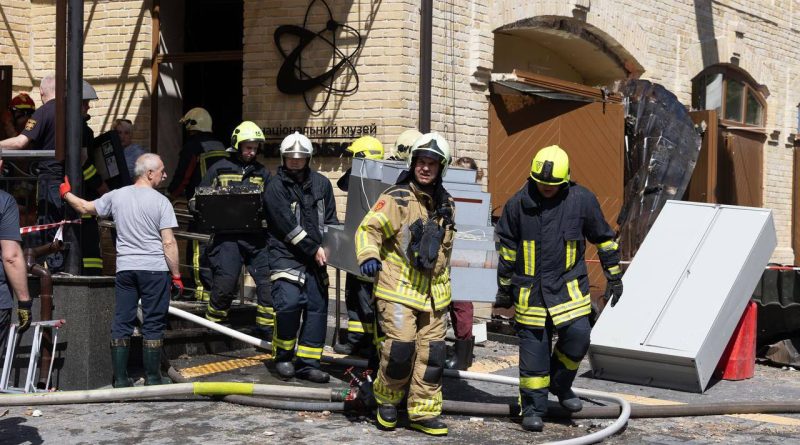
Russian Strike Destroys Nearly 40% of Exhibits at Kyiv’s Chernobyl Museum – Video Released
Ukraine’s Ministry of Internal Affairs has released harrowing footage showing the devastating aftermath of a Russian missile strike that severely damaged the Chernobyl Museum in Kyiv, one of the world’s most significant repositories documenting the 1986 nuclear disaster. According to preliminary assessments, approximately 40% of the museum’s irreplaceable exhibits have been destroyed or damaged beyond repair, representing an incalculable loss to global nuclear history and the memory of those who sacrificed their lives during the world’s worst nuclear accident.
The video footage, shared across official government channels, reveals scenes of destruction throughout the museum’s exhibition halls. Shattered display cases, scattered documents, damaged photographs, and destroyed artifacts litter the floors of what was once a carefully curated space dedicated to preserving the memory of the Chernobyl catastrophe. Museum staff and emergency responders can be seen carefully navigating through the debris, attempting to salvage whatever remains of the priceless collection that took decades to assemble.
The National Chernobyl Museum, established in 1992 just six years after the disaster, housed an extensive collection of over 7,000 artifacts related to the nuclear catastrophe that shook the world on April 26, 1986. The museum’s collection included personal belongings of the liquidators – the brave emergency workers who risked their lives to contain the disaster – as well as protective equipment, official documents, photographs, and scientific instruments used during the cleanup operations. Many of these items were donated by families of those who perished or suffered long-term health consequences from radiation exposure, making them not just historical artifacts but deeply personal memorials.
The 1986 Chernobyl disaster remains the most severe nuclear accident in history, classified as a Level 7 event on the International Nuclear Event Scale. The explosion at Reactor No. 4 released approximately 400 times more radiation than the atomic bomb dropped on Hiroshima, contaminating vast areas of Ukraine, Belarus, and Russia. An estimated 350,000 people were permanently evacuated from the surrounding areas, and the health impacts continue to affect millions to this day. The museum served as a crucial educational institution, attracting visitors from around the world and playing a vital role in nuclear safety awareness and historical preservation.
This attack on the Chernobyl Museum is part of a broader pattern of cultural heritage destruction that has characterized Russia’s military campaign in Ukraine since the full-scale invasion began in February 2022. UNESCO has documented hundreds of incidents of damage to cultural sites across Ukraine, including museums, churches, libraries, and historical monuments. International experts have condemned these attacks as potential violations of the 1954 Hague Convention for the Protection of Cultural Property in the Event of Armed Conflict, which prohibits the targeting of cultural heritage sites during warfare.
The destruction carries particular symbolic weight given Russia’s own historical connection to the Chernobyl disaster. Soviet authorities initially attempted to cover up the accident, and many Russian citizens were among the liquidators who heroically worked to contain the catastrophe. The museum contained artifacts and testimonies that honored these individuals regardless of their nationality, making the attack seem all the more senseless to observers worldwide. Ukrainian officials have emphasized that this strike represents not only an attack on Ukrainian cultural heritage but on the shared memory of a tragedy that transcended national boundaries.
Museum officials and cultural preservation experts have begun the painstaking process of documenting the damage and attempting to restore what can be saved. International organizations, including UNESCO and the International Council of Museums, have offered assistance in preservation and restoration efforts. Digital archives created before the war may help reconstruct some of the lost exhibitions, though many physical artifacts – particularly personal items belonging to liquidators and their families – can never be replaced. The Ukrainian government has vowed to rebuild the museum and continue its mission of educating future generations about the Chernobyl disaster, viewing the preservation of this history as both a national duty and a global responsibility.
As the war continues, the attack on the Chernobyl Museum serves as a stark reminder of the broader cultural costs of the conflict. Beyond the immediate human toll, the systematic destruction of Ukraine’s cultural institutions threatens to erase crucial chapters of history that belong not just to Ukraine but to all of humanity. The international community has called for increased protection of cultural sites and accountability for those responsible for their destruction, though the immediate priority remains documenting losses and salvaging whatever artifacts can still be saved from the rubble.