
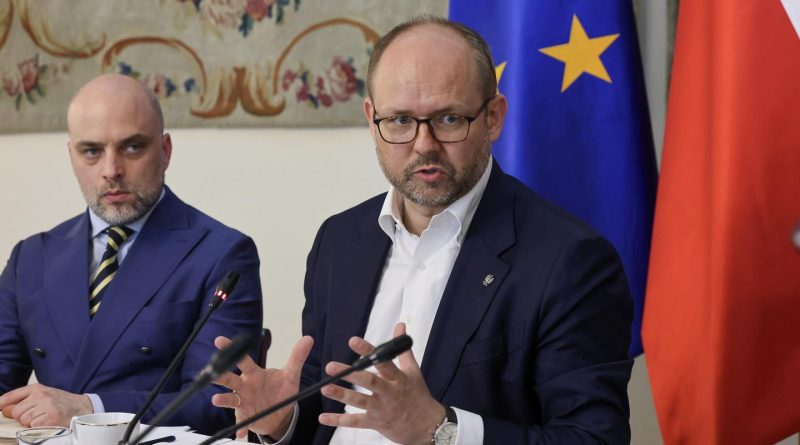
Polish Presidential Advisor Demands Zelensky Apologize Over UPA Military Unit Naming Decision
A significant diplomatic dispute has erupted between Poland and Ukraine following Ukrainian President Volodymyr Zelensky’s decision to bestow an honorary name upon a Ukrainian military unit that has reignited painful historical wounds. Marcin Przydacz, a senior advisor to Polish President Andrzej Duda and a key figure in the presidential administration, has called for Zelensky to issue a formal apology while simultaneously demanding that Polish Prime Minister Donald Tusk demonstrate solidarity with President Duda on this sensitive matter. The controversy centers on Zelensky’s decree granting a Ukrainian Armed Forces unit the honorary title “Heroes of UPA” — a reference to the Ukrainian Insurgent Army that operated during World War II.
The Ukrainian Insurgent Army, known by its Ukrainian acronym UPA, remains one of the most contentious historical subjects between the two neighboring nations. While many Ukrainians view the UPA as freedom fighters who battled for Ukrainian independence against Soviet occupation, Polish historical memory associates the organization with the Volhynia massacre of 1943-1944, during which an estimated 50,000 to 100,000 ethnic Poles were killed in what is now western Ukraine. This divergent historical interpretation has repeatedly complicated Polish-Ukrainian relations, even as the two countries have grown closer in recent years due to shared security concerns regarding Russian aggression.
Przydacz’s statement reflects the deep sensitivity surrounding this issue within Polish political circles and among the broader Polish public. The advisor emphasized that glorifying the UPA is incompatible with the values of European partnership and mutual respect between nations. He argued that President Zelensky’s decision represents a step backward in bilateral relations at a time when Ukraine desperately needs Western support for its ongoing defense against Russian invasion. The timing of this controversy is particularly awkward, as Poland has been one of Ukraine’s most stalwart supporters since February 2022, providing military equipment, humanitarian aid, and hosting millions of Ukrainian refugees.
The demand for Prime Minister Tusk to publicly support President Duda adds another layer of complexity to the situation, revealing domestic political tensions within Poland itself. Duda, representing the conservative Law and Justice party’s political camp, and Tusk, leader of the centrist Civic Platform coalition that currently holds governmental power, have frequently clashed on both domestic and foreign policy matters. Przydacz’s call appears designed to test whether Tusk will prioritize national unity on historical issues or maintain distance from his political rival. Polish analysts suggest this creates a challenging situation for Tusk, who must balance maintaining strong support for Ukraine while acknowledging legitimate Polish historical grievances.
Historical reconciliation efforts between Poland and Ukraine have experienced numerous setbacks over the past decade. In 2016, the Polish parliament officially recognized the Volhynia massacre as genocide, a designation that Ukrainian authorities have resisted accepting. Previous attempts at joint commemorations and historical dialogue have produced mixed results, with progress often undermined by nationalist sentiments on both sides. Ukrainian historians and politicians have argued that the UPA’s actions must be understood within the broader context of wartime chaos and the organization’s primary mission of fighting for Ukrainian statehood against multiple occupying powers, including Nazi Germany and the Soviet Union.
The current crisis arrives at a particularly delicate moment in European geopolitics. Ukraine continues to rely heavily on Polish support for military logistics, with the country serving as a crucial transit hub for Western weapons deliveries. Poland has also advocated strongly within NATO and the European Union for increased assistance to Kyiv. However, relations have already been strained by disputes over Ukrainian grain exports affecting Polish farmers and disagreements about the pace of Ukraine’s EU accession process. This latest controversy threatens to further complicate what has been described as the most important bilateral relationship for Ukraine’s Euro-Atlantic aspirations.
International relations experts note that symbolic gestures and historical memory politics can have outsized impacts on diplomatic relationships, particularly between nations with intertwined and painful histories. Some analysts suggest that Zelensky’s decision may have been intended primarily for domestic consumption, aimed at reinforcing Ukrainian national identity during wartime, without fully considering the international ramifications. Others argue that Ukraine must be allowed to honor its historical figures as it sees fit, even if this creates discomfort among allies. What remains clear is that both nations face the challenging task of honoring their respective historical narratives while maintaining the strategic partnership that serves both countries’ contemporary security interests. The resolution of this dispute will likely require careful diplomatic engagement and potentially compromise from both Kyiv and Warsaw.