
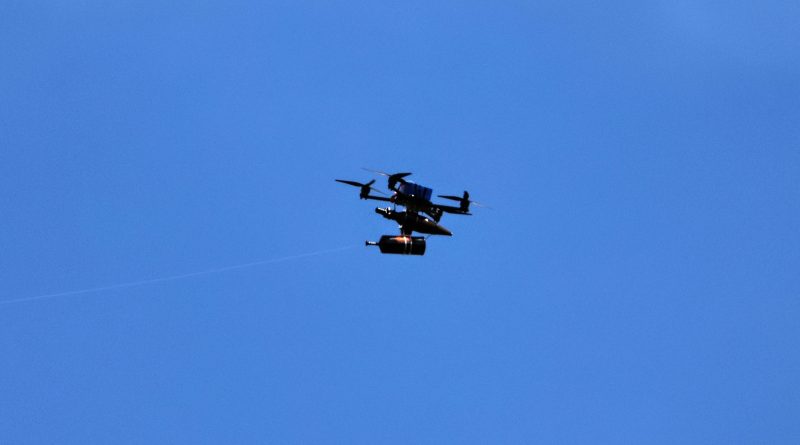
Hezbollah Adopts Russian Warfare Tactics: Fiber-Optic Guided Drones Target Israel
In a significant escalation of technological warfare in the Middle East, Hezbollah has begun deploying a new generation of drones guided by fiber-optic cables to attack Israeli territory. This innovative approach, which mirrors tactics developed and refined by Russian forces during their ongoing conflict with Ukraine, represents a concerning evolution in the Lebanese militant group’s capabilities and poses fresh challenges for Israel’s sophisticated air defense systems.
Israeli Prime Minister Benjamin Netanyahu has acknowledged the severity of the threat, pledging that a dedicated task force is actively working to counter these new drone attacks. The statement comes amid growing concerns among Israeli defense officials about the effectiveness of traditional countermeasures against this emerging threat. Unlike conventional drones that rely on radio frequency signals or GPS navigation, fiber-optic guided unmanned aerial vehicles are significantly harder to detect and intercept, as they emit virtually no electronic signatures that defense systems typically exploit.
The fiber-optic drone technology first gained prominence on the battlefields of Ukraine, where Russian forces deployed these systems to circumvent Ukrainian electronic warfare capabilities. The technology works by transmitting control signals and video feeds through a thin fiber-optic cable that trails behind the drone during flight. This method provides several tactical advantages: it is immune to radio jamming, offers real-time high-definition video transmission without latency, and makes the drone nearly invisible to electronic detection systems. Iran, Hezbollah’s primary sponsor and arms supplier, has reportedly studied these Russian innovations closely and adapted them for transfer to its regional proxies.
The strategic implications of this technological transfer extend far beyond the immediate tactical challenges. Defense analysts suggest that the proliferation of fiber-optic drone technology represents a broader shift in asymmetric warfare capabilities available to non-state actors. Historically, sophisticated military technologies remained the exclusive domain of well-funded national militaries, but the relatively low cost and accessibility of drone components have democratized modern warfare in unprecedented ways. Hezbollah, already considered one of the most technologically advanced militant organizations globally, has demonstrated a consistent ability to adopt and adapt emerging military technologies.
Israel’s renowned Iron Dome missile defense system, while highly effective against conventional rocket attacks, faces inherent limitations when confronting low-flying, slow-moving drones that present minimal radar cross-sections. The system was primarily designed to intercept short-range rockets and artillery shells, making it less optimized for the unique threat profile presented by fiber-optic guided drones. Israeli defense industries have reportedly accelerated development of laser-based interception systems and enhanced detection capabilities, but implementing these solutions across the country’s borders remains a formidable logistical and financial undertaking.
The Russia-Ukraine conflict has effectively become a testing ground for military innovations that are rapidly spreading to other conflict zones worldwide. From loitering munitions to electronic warfare techniques, lessons learned in Eastern Europe are being studied and applied by armed forces and militant groups across the globe. Iran’s Revolutionary Guard Corps has maintained close military cooperation with Russia, including reported exchanges of drone technology and tactical knowledge. This partnership has enabled Tehran to enhance its own drone programs and subsequently share these advancements with allied groups including Hezbollah, Hamas, and Houthi rebels in Yemen.
For Israeli civilians living in northern communities near the Lebanese border, the drone threat adds another layer of anxiety to an already tense security situation. Unlike rocket attacks that trigger warning sirens with sufficient time for residents to seek shelter, drone incursions often occur with minimal advance notice. The psychological impact of these attacks, combined with their potential precision-strike capabilities, has forced thousands of Israelis to evacuate border communities since tensions escalated in recent months. Netanyahu’s government faces mounting pressure to deliver effective solutions while simultaneously managing multiple security fronts.
Military experts emphasize that countering fiber-optic drone threats requires a multi-layered approach combining improved detection technologies, rapid response protocols, and potentially offensive operations targeting drone launch sites and supply chains. The Israeli Defense Forces have conducted numerous strikes against Hezbollah infrastructure in Lebanon, though eliminating the drone threat entirely would require sustained operations that risk broader regional escalation. As both sides continue adapting their tactics and technologies, the conflict increasingly resembles a high-stakes technological arms race with implications extending far beyond the immediate theater of operations.