
Ukrainian Gymnasts Make Powerful Silent Protest at European Championships by Blocking Out Russian and Belarusian Anthems
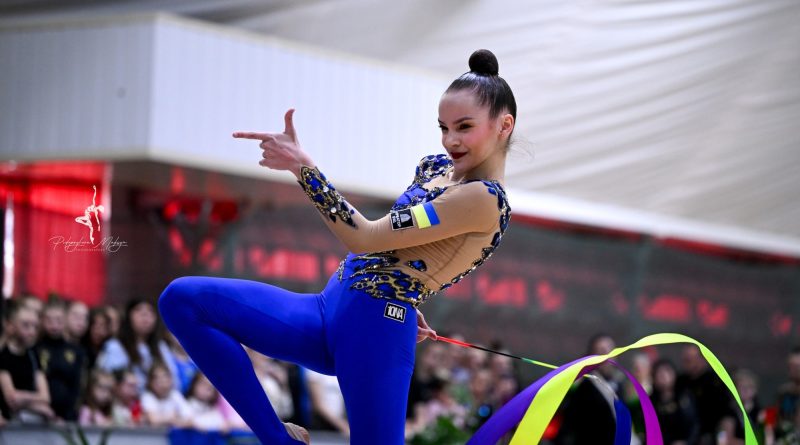
In a striking act of defiance that captured international attention, Ukrainian rhythmic gymnasts Oleksandra Kraiinska and Olena Chubarova staged a silent but powerful protest during the medal ceremony at the European Rhythmic Gymnastics Championships. When the national anthems of Russia and Belarus began playing to honor medalists from those countries, the Ukrainian athletes deliberately inserted earphones to block out the music while covering their eyes with their hands, refusing to witness or hear what they consider symbols of aggressor nations.
The emotional moment, captured on video and quickly shared across social media platforms, resonated deeply with audiences worldwide who have been following the ongoing conflict in Ukraine. The gesture spoke volumes without a single word being uttered, representing the pain and resistance of a nation that has been at war since Russia’s full-scale invasion began in February 2022. For Kraiinska and Chubarova, standing on the same podium as athletes from countries their homeland considers hostile presented an impossible situation that they navigated with quiet dignity.
The incident highlights the increasingly complex intersection of sports and geopolitics that has defined international competitions since the outbreak of the war in Ukraine. While the International Olympic Committee and various sports federations have implemented sanctions against Russian and Belarusian athletes, many have been gradually allowed to return to competition under neutral flags and without national symbols. However, for Ukrainian athletes who have lost friends, family members, and teammates to the conflict, competing alongside representatives of these nations remains deeply traumatic regardless of technical neutrality measures.
Rhythmic gymnastics has historically been dominated by Eastern European nations, with Russia and Ukraine both producing world-class competitors for decades. The sport requires extraordinary flexibility, coordination, and artistic expression, making it particularly popular in the former Soviet republics where training programs have been well-established since the Soviet era. Ukraine has a proud tradition in the discipline, having won numerous Olympic and World Championship medals. The current generation of Ukrainian gymnasts carries this legacy while bearing the additional burden of representing their country during its most challenging period in modern history.
This is not the first time Ukrainian athletes have used international sporting events as platforms for protest. Throughout 2022, 2023, and into 2024, Ukrainian competitors across various disciplines have refused to shake hands with Russian opponents, displayed protest messages, and made public statements condemning the invasion. The International Olympic Committee has walked a difficult line, attempting to keep sports apolitical while acknowledging the unprecedented circumstances of the conflict. Many argue that completely neutral competition is impossible when athletes from one country are actively fighting a war started by another.
The response to the Ukrainian gymnasts’ protest has been largely supportive across Western nations, with many praising their courage to make a statement on such a visible stage. Sports psychologists note that competing under such emotional circumstances requires extraordinary mental fortitude. These athletes must not only perform at the highest technical level but also process complex feelings of grief, anger, and national pride while maintaining their composure in front of international audiences and judges. The psychological toll on Ukrainian athletes across all sports has been well-documented, with many continuing to compete while knowing their hometowns are under bombardment.
The incident also raises broader questions about the role of national anthems and symbols in international sports. While federations have attempted to create neutral conditions by removing Russian flags and anthem requirements in some contexts, medal ceremonies often still include these elements for athletes competing under various classifications. For nations directly affected by conflict, these moments become flashpoints that no amount of bureaucratic neutrality can fully address. The Ukrainian gymnasts’ simple act of covering their ears and eyes cut through the diplomatic complexity with raw human emotion.
As the European Championships continue and the international sports calendar moves toward future competitions, the tension between maintaining sporting traditions and acknowledging geopolitical realities shows no signs of resolution. Ukrainian athletes have made clear that they will continue to find ways to express their nation’s suffering and resistance, even within the constraints of competition rules. For Kraiinska and Chubarova, their silent protest ensured that the world remembered, even for a moment, that behind the medals and performances lies a devastating human conflict that continues to claim lives daily.