
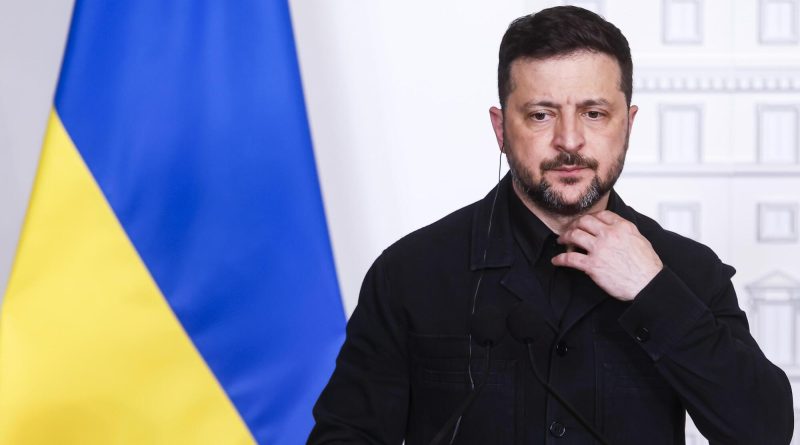
Zelensky Expected to Attend G7 Summit with Air Defense Against Ballistic Missiles High on Agenda
Ukrainian President Volodymyr Zelensky is expected to make a significant appearance at the upcoming Group of Seven summit, according to sources familiar with the diplomatic planning. The visit would provide a crucial opportunity for the Ukrainian leader to engage directly with the world’s most powerful democratic nations as his country continues to face an intensifying aerial assault from Russian forces. The meeting comes at a critical juncture in the ongoing conflict, with Ukraine increasingly vocal about its need for advanced defensive systems capable of intercepting sophisticated ballistic missile threats.
The G7 summit, which brings together leaders from the United States, United Kingdom, France, Germany, Italy, Canada, and Japan, has become an essential platform for coordinating Western support for Ukraine since Russia’s full-scale invasion began in February 2022. Sources indicate that air defense capabilities, particularly systems designed to counter ballistic missiles, will feature prominently in discussions between Zelensky and the assembled world leaders. This focus reflects the evolving nature of Russian attacks, which have increasingly employed ballistic missiles that travel at extreme velocities and require specialized interception systems.
The urgency surrounding air defense has intensified dramatically in recent months as Russia has expanded its campaign of aerial bombardment against Ukrainian cities and critical infrastructure. Unlike cruise missiles, which fly at lower altitudes and slower speeds, ballistic missiles follow a high-arcing trajectory and can reach speeds exceeding Mach 5 during their terminal phase. This makes them exceptionally difficult to intercept with conventional air defense systems. Ukraine currently operates a patchwork of Western-supplied systems including American Patriot batteries and European IRIS-T units, but military analysts argue that significantly more coverage is needed to protect the country’s vast territory.
The Patriot system, developed by Raytheon and considered one of the world’s most capable air defense platforms, has proven effective against various Russian aerial threats including hypersonic Kinzhal missiles. However, the limited number of batteries provided to Ukraine means that only select high-value targets can receive protection at any given time. Each Patriot battery requires substantial crews, extensive training, and a continuous supply of missiles that can cost several million dollars each. Western allies have been cautious about providing additional systems due to concerns about depleting their own defensive capabilities and the logistical challenges of sustaining such sophisticated equipment in an active combat zone.
Historical context underscores the strategic importance of air defense in modern warfare. During the Gulf War, Patriot systems gained international recognition for their role in intercepting Iraqi Scud missiles, though subsequent analysis revealed mixed effectiveness rates. The technology has advanced considerably since then, with current PAC-3 variants offering dramatically improved capabilities against ballistic threats. For Ukraine, establishing a robust air defense network represents not merely a military necessity but a humanitarian imperative, as Russian strikes have repeatedly targeted civilian apartment buildings, hospitals, and energy infrastructure that millions of Ukrainians depend upon for survival during harsh winter months.
Zelensky’s diplomatic engagement with G7 leaders also carries significant political weight as the alliance navigates complex domestic considerations in member nations. The United States, by far the largest contributor of military aid to Ukraine, has seen ongoing debates in Congress about the scope and duration of support. European nations, while broadly unified in their backing of Kyiv, face their own economic pressures and varying public sentiment about the conflict’s trajectory. The Ukrainian president has proven remarkably effective at rallying international support through personal appeals, having transformed from a former television comedian into a wartime leader who commands global attention and sympathy.
Beyond immediate military assistance, discussions at the G7 are expected to address longer-term security guarantees for Ukraine and the country’s path toward European integration. Western leaders have increasingly acknowledged that sustainable peace will require not only the eventual cessation of hostilities but also credible deterrence mechanisms to prevent future Russian aggression. The summit provides an opportunity to signal continued resolve and potentially announce new assistance packages that could include additional air defense components, ammunition supplies, and economic support to help Ukraine maintain governmental functions while prosecuting its defense. As the conflict enters its third year, such high-level diplomatic engagements remain essential for sustaining the international coalition that Ukraine depends upon for its survival.