
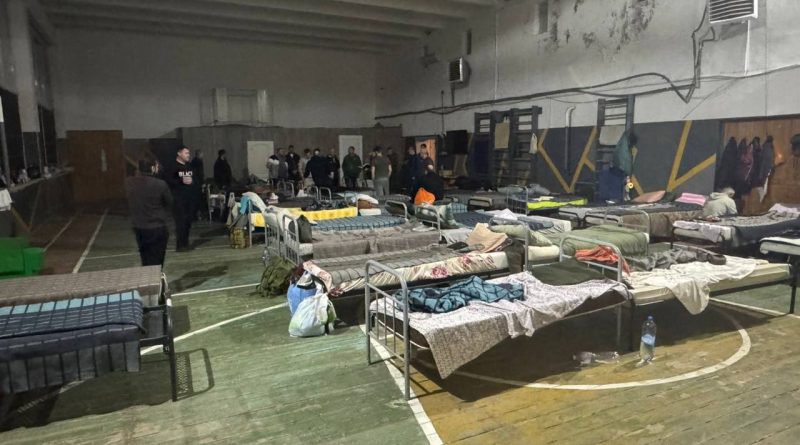
Western Operational Command Confirms Violations at Uzhhorod Recruitment Center Following Ombudsman’s Allegations
Ukrainian military authorities have confirmed serious violations at the Uzhhorod Territorial Recruitment and Social Support Center (TRCSS) in the Zakarpattia region, following public statements made by the country’s Parliamentary Commissioner for Human Rights. The Western Operational Command announced that disciplinary measures have been imposed on officials found responsible for the misconduct, marking another chapter in Ukraine’s ongoing struggle to balance wartime mobilization needs with citizens’ rights and legal procedures.
The confirmation comes after Ukraine’s Ombudsman raised concerns about irregularities in the recruitment center’s operations, prompting an internal investigation by military command structures. The Western Operational Command, which oversees military operations and territorial defense in Ukraine’s western regions, conducted a thorough review of the allegations and determined that multiple violations had indeed occurred. While specific details about the nature of the infractions have not been fully disclosed, the acknowledgment represents a significant admission by military authorities amid heightened public scrutiny of mobilization practices.
The situation at the Uzhhorod TRCSS reflects broader tensions that have emerged across Ukraine as the country continues its full-scale defense against Russian aggression. Since the beginning of the full-scale invasion in February 2022, Territorial Recruitment Centers have faced immense pressure to fulfill mobilization quotas while simultaneously dealing with widespread public anxiety about conscription procedures. Reports of heavy-handed tactics, arbitrary detentions, and procedural violations have surfaced from various regions, leading to public outcry and demands for reform. The Ukrainian government has repeatedly pledged to address these concerns while emphasizing the existential nature of the military threat facing the nation.
Zakarpattia Oblast, where Uzhhorod serves as the administrative center, occupies a unique position in Ukraine’s mobilization landscape. Bordering four NATO member states — Poland, Slovakia, Hungary, and Romania — the region has remained far from active combat zones throughout the conflict. This geographical distance from the front lines has created distinct challenges for recruitment efforts, as residents have not experienced the immediate threat of Russian occupation that has galvanized mobilization in eastern and southern regions. The area’s multicultural composition, including significant Hungarian and Romanian minorities, adds additional complexity to the implementation of nationwide military policies.
The role of Ukraine’s Parliamentary Commissioner for Human Rights, commonly known as the Ombudsman, has become increasingly prominent in monitoring mobilization-related complaints. The office has received thousands of appeals from citizens reporting alleged abuses by recruitment officials, ranging from improper documentation procedures to physical mistreatment during detention. By publicly addressing the Uzhhorod situation, the Ombudsman’s office demonstrated its willingness to hold military structures accountable, even during wartime conditions when national security concerns often take precedence over individual grievances. This institutional check on military authority represents an important element of Ukraine’s democratic governance during the conflict.
Disciplinary actions against military officials, while significant, raise questions about whether administrative measures alone can address systemic issues within the recruitment system. Critics argue that isolated punishments fail to tackle underlying problems, including inadequate training for recruitment personnel, unclear operational guidelines, and insufficient oversight mechanisms. Ukrainian civil society organizations have called for comprehensive reforms that would establish transparent procedures, independent monitoring, and meaningful accountability for violations. The Ministry of Defense has acknowledged these concerns and announced various initiatives to improve the mobilization process, though implementation remains uneven across different regions.
The international community has watched Ukraine’s mobilization efforts with considerable interest, as the country’s ability to sustain its military forces directly impacts the trajectory of the conflict. Western allies providing military assistance have generally avoided public commentary on internal Ukrainian policies, recognizing the sovereign nature of conscription decisions. However, human rights organizations have emphasized that even during wartime, fundamental rights protections must be maintained to preserve the democratic values that Ukraine is fighting to defend. The balance between military necessity and civil liberties continues to define one of the most challenging aspects of Ukraine’s wartime governance, with cases like the Uzhhorod violations serving as important tests of the nation’s commitment to the rule of law.