
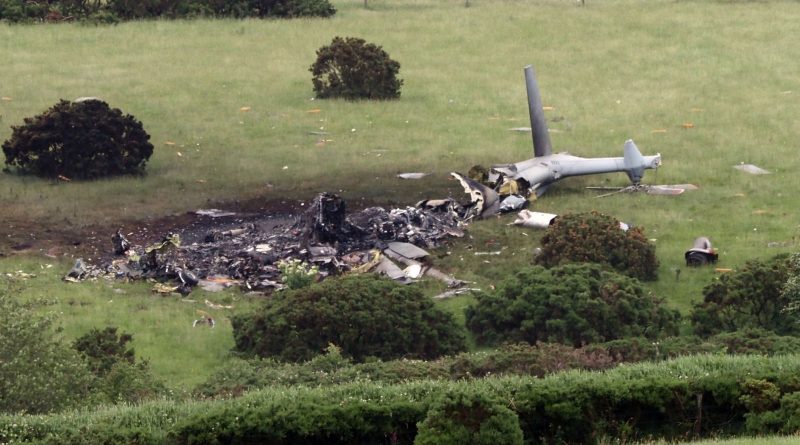
Royal Navy Helicopter Crashes in Britain, Three Military Personnel Killed
A tragic incident has struck the British armed forces as a Royal Navy helicopter crashed in the United Kingdom, claiming the lives of three military personnel. The accident occurred near a military training range, prompting an immediate investigation into the circumstances surrounding the fatal crash. Emergency services rushed to the scene, but were unable to save the crew members aboard the aircraft, marking one of the most significant military aviation losses in recent years for the Royal Navy.
The crash site has been secured by military and civilian authorities as investigators work to determine the cause of the accident. Initial reports indicate that the helicopter went down in a rural area close to an active military training facility, raising questions about whether the aircraft was engaged in routine exercises at the time of the incident. Eyewitnesses reported seeing the helicopter in distress before it impacted the ground, with some accounts describing smoke trailing from the aircraft moments before the crash.
The Royal Navy maintains one of the most sophisticated helicopter fleets in the world, with aircraft serving critical roles in maritime operations, search and rescue missions, anti-submarine warfare, and troop transport. The service operates various helicopter types including the Merlin, Wildcat, and other specialized aircraft from both land bases and naval vessels. These helicopters and their crews undergo rigorous training and maintenance protocols, making fatal accidents relatively rare but devastating when they do occur. The Royal Navy’s Fleet Air Arm has a proud history dating back to 1914, and its personnel are considered among the most skilled military aviators in the world.
Military aviation safety has been a persistent concern for defense forces globally, with the complex nature of helicopter operations presenting unique challenges even for highly trained crews. Helicopters must contend with mechanical stresses from their rotating components, weather conditions, and the demanding environments in which they operate. In recent decades, the British military has implemented numerous safety improvements and upgraded its fleet to reduce accident rates, yet the inherent risks of military flying cannot be entirely eliminated. Each incident prompts thorough review and potential policy changes to prevent future tragedies.
The Ministry of Defence has expressed condolences to the families of the fallen service members, with senior military officials expected to make formal statements in the coming days. The identities of the three victims have not yet been released publicly, as authorities follow standard protocol of notifying next of kin before any official announcement. The loss of experienced military personnel represents not only a personal tragedy for their families and colleagues but also a significant loss for the armed forces, as helicopter crews require years of specialized training to reach operational readiness.
This incident adds to a somber record of military aviation accidents in the United Kingdom over the years. The British armed forces have experienced several notable helicopter crashes in recent decades, each prompting reviews of safety procedures and equipment. The military aviation community is close-knit, and such losses are felt deeply across all branches of service. Support services will be made available to colleagues and family members as they cope with this sudden loss, while the investigation proceeds to establish facts that might prevent similar accidents in the future.
As the investigation unfolds, aviation experts and military analysts will be closely watching for preliminary findings that might shed light on what went wrong. Modern military helicopters are equipped with flight data recorders and other monitoring systems that can provide crucial information about aircraft performance in the moments leading up to an accident. The Air Accidents Investigation Branch, working alongside military investigators, will examine all available evidence including wreckage analysis, maintenance records, weather data, and any available video footage from the scene. The process typically takes months to complete, with families and the public awaiting answers about how this tragedy occurred and what steps might be taken to honor the memory of those lost by improving safety for those who continue to serve.