
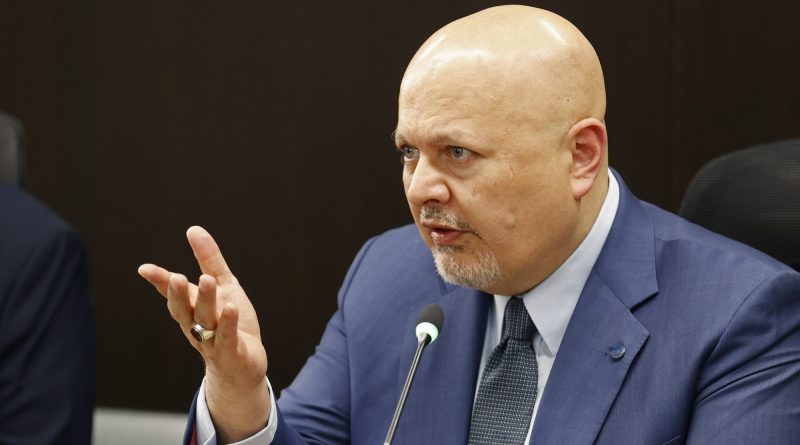
ICC Suspends Prosecutor Karim Khan Who Issued Arrest Warrants for Putin and Netanyahu
The International Criminal Court has taken the extraordinary step of suspending its chief prosecutor, Karim Khan, following serious allegations of sexual misconduct. According to Reuters, Khan stands accused of engaging in sexual contact without consent with a female lawyer who worked in his office. The suspension marks an unprecedented crisis for the world’s primary institution for prosecuting war crimes and crimes against humanity, coming at a particularly sensitive time when the court is handling some of the most politically charged cases in its history.
The ICC’s Assembly of States Parties announced the suspension as an investigation into the allegations proceeds. Khan, a British barrister who assumed the role of ICC prosecutor in June 2021, has reportedly denied the accusations against him. The alleged victim, whose identity has been protected, was a member of Khan’s prosecutorial team. The decision to suspend the prosecutor rather than allow him to continue working during the investigation reflects the gravity with which the court is treating these allegations, though it also raises questions about the timing and potential implications for ongoing cases.
Karim Khan rose to international prominence through his aggressive pursuit of high-profile cases against world leaders. In March 2023, the ICC issued an arrest warrant for Russian President Vladimir Putin, accusing him of war crimes related to the deportation of Ukrainian children during Russia’s ongoing invasion of Ukraine. This marked the first time the court had issued a warrant for a sitting leader of a United Nations Security Council permanent member. More recently, in November 2024, Khan secured arrest warrants for Israeli Prime Minister Benjamin Netanyahu and former Defense Minister Yoav Gallant, as well as Hamas military commander Mohammed Deif, in connection with alleged crimes committed during the Gaza conflict.
The arrest warrants against Netanyahu and Putin placed the ICC at the center of intense geopolitical controversy. Israel rejected the court’s jurisdiction and accused it of antisemitism, while the United States, which is not a member of the ICC, criticized the warrants against Israeli officials. Russia, which withdrew its signature from the Rome Statute in 2016, similarly dismissed the court’s authority. Despite these challenges, over 120 countries remain bound by treaty to arrest these individuals should they enter their territory, creating significant restrictions on their international travel.
The International Criminal Court was established in 2002 through the Rome Statute, designed to prosecute individuals for genocide, crimes against humanity, war crimes, and the crime of aggression. Based in The Hague, Netherlands, the court serves as a court of last resort, stepping in when national judicial systems are unwilling or unable to prosecute such crimes. Throughout its two-decade history, the ICC has faced persistent criticism from various quarters — some arguing it disproportionately targets African leaders, while others contend it lacks enforcement mechanisms and depends entirely on state cooperation to execute its mandates.
Khan’s suspension creates significant uncertainty for the court’s most consequential ongoing investigations. Legal experts note that while the Office of the Prosecutor can continue its work under deputy leadership, the absence of the chief prosecutor could slow proceedings and potentially provide ammunition to those who seek to delegitimize the court’s work. The timing of these allegations has led to speculation in some quarters about potential political motivations, though no evidence has emerged to support such theories. Both supporters and critics of the court are watching closely to see how the institution handles this internal crisis while maintaining its credibility on the world stage.
The ICC now faces the delicate task of conducting a thorough and transparent investigation while preserving its ability to pursue justice in cases involving some of the world’s most powerful figures. The outcome of this investigation will likely have lasting implications not only for Khan’s career but for the court’s reputation and its capacity to hold leaders accountable for alleged atrocities. As the situation develops, the Assembly of States Parties will need to balance the presumption of innocence with the court’s responsibility to maintain the highest ethical standards among its leadership.