
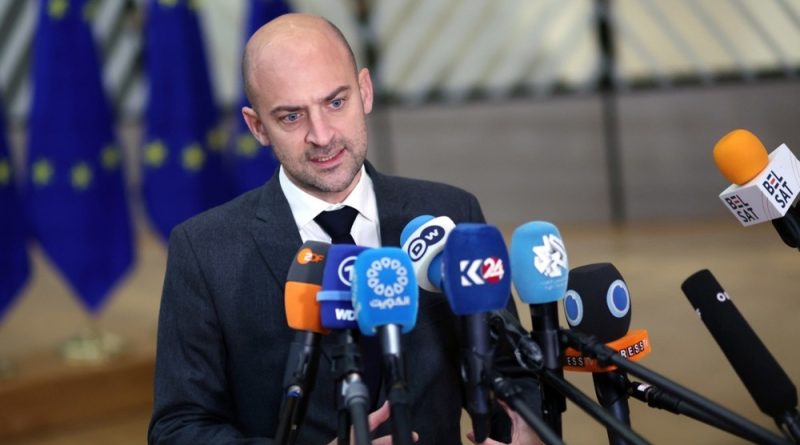
France to Summon Russian Ambassador and Announce New Sanctions Over Large-Scale Cyberattacks Across Europe
French Foreign Minister Jean-Noël Barrot has announced that France will summon the Russian ambassador to Paris and unveil a new package of sanctions targeting individuals and organizations allegedly responsible for a sustained campaign of cyberattacks against European nations. The diplomatic move represents one of France’s most forceful responses to what officials describe as an escalating pattern of digital aggression emanating from Russia, marking a significant escalation in the ongoing cyber tensions between Moscow and Western European capitals.
According to the French Foreign Ministry, the forthcoming sanctions will target nine individuals and four organizations identified as key actors behind Russia’s cyber operations directed at European infrastructure and institutions. Minister Barrot emphasized that these measures are designed to hold accountable those who orchestrate and execute attacks that threaten the security, democratic processes, and critical infrastructure of France and its European allies. The decision to summon the Russian ambassador underscores the gravity with which Paris views these incidents, as such diplomatic gestures are typically reserved for the most serious breaches of international norms.
The announcement comes amid a broader pattern of increasingly sophisticated cyberattacks attributed to Russian state-sponsored hacking groups that have targeted European governments, businesses, and civil society organizations over the past several years. Intelligence agencies across the continent have documented attacks on election systems, healthcare networks, energy infrastructure, and government databases. Notable incidents include the 2017 NotPetya attack, which caused billions of dollars in damage worldwide, and more recent intrusions targeting COVID-19 vaccine research facilities. These operations have been linked to various Russian intelligence services, including the GRU military intelligence agency and the FSB security service, though Moscow has consistently denied involvement in such activities.
France has emerged as a particularly vocal critic of Russian cyber operations following several high-profile incidents on its own soil. French cybersecurity authorities have previously attributed attacks on the presidential campaign of Emmanuel Macron in 2017 to Russian actors, while more recent operations have targeted French hospitals during the pandemic and attempted to infiltrate government communication systems. The French National Agency for Information Systems Security has been working closely with European partners to strengthen collective defenses and develop attribution capabilities that can definitively link attacks to their sources, enabling the kind of targeted response now being announced.
The European Union has increasingly turned to sanctions as a tool for responding to hostile cyber activities, establishing a dedicated cyber sanctions regime in 2019 that allows member states to impose travel bans and asset freezes on individuals and entities responsible for significant cyberattacks. This framework has already been used to target Russian, Chinese, and North Korean actors, but the scope of France’s announced measures suggests a willingness to expand and strengthen these punitive mechanisms. Legal experts note that while sanctions may not immediately halt cyber operations, they serve important signaling functions and can disrupt the financial networks that support such activities.
Russia has consistently rejected Western accusations of state-sponsored hacking, with Kremlin officials characterizing such claims as baseless and politically motivated attempts to damage relations with Moscow. However, cybersecurity researchers and intelligence agencies have amassed substantial evidence linking specific hacking groups to Russian government agencies, including detailed technical analysis of malware, infrastructure, and operational patterns. The contrast between official Russian denials and the growing body of attribution evidence has become a recurring point of tension in diplomatic exchanges between Russia and Western nations.
The timing of France’s announcement also reflects growing European concern about hybrid warfare tactics ahead of potential geopolitical flashpoints, including ongoing tensions related to the conflict in Ukraine. European leaders have warned that cyber operations often accompany or precede conventional military and political pressure campaigns, making robust deterrence essential to regional security. As France prepares to formally present its sanctions and deliver its diplomatic protest, the move signals that European patience with Russian cyber activities is wearing thin, potentially heralding a more confrontational approach to digital security across the continent in the months ahead.
}