
Poland Honors Victims of Volhynia Tragedy: Defense Minister Arrives in Ukraine for Memorial Ceremony
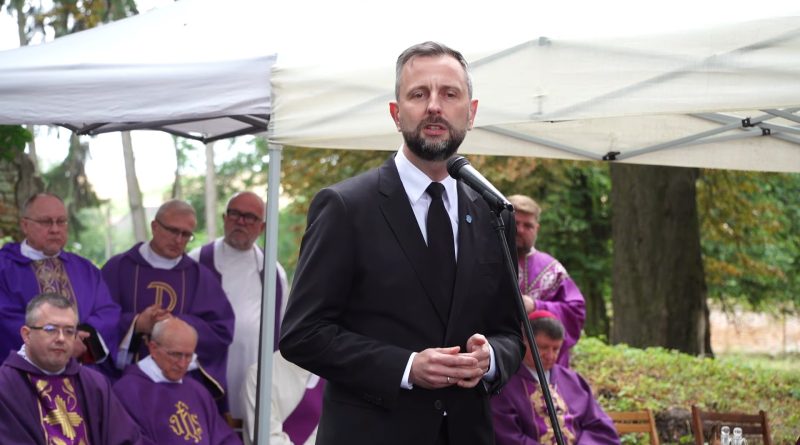
Polish Defense Minister Władysław Kosiniak-Kamysz traveled to Ukraine to participate in memorial ceremonies commemorating the victims of the Volhynia tragedy, one of the most painful chapters in Polish-Ukrainian relations. The visit underscores Poland’s commitment to preserving historical memory while navigating the complex diplomatic landscape between the two neighboring nations during a time when Ukraine faces ongoing Russian aggression.
In his address during the commemorative events, Kosiniak-Kamysz delivered a poignant message emphasizing the importance of honesty and mutual respect between the two peoples. The minister called upon both nations not to cause each other pain and to speak the truth to one another, even when that truth is difficult to hear. His words reflected the delicate balance Poland seeks to maintain between honoring its historical victims and supporting Ukraine as a crucial ally in the current geopolitical situation.
The Volhynia tragedy refers to a series of mass killings carried out primarily between 1943 and 1944 in the Volhynia and Eastern Galicia regions, territories that were part of German-occupied Poland during World War II and are now within Ukraine’s borders. Historical estimates suggest that between 50,000 and 100,000 Polish civilians lost their lives during these events, which were perpetrated by the Ukrainian Insurgent Army (UPA) and local collaborators. The massacres represented one of the bloodiest ethnic cleansing campaigns of the war, leaving deep scars that continue to affect Polish-Ukrainian relations to this day.
For decades, the Volhynia tragedy remained a taboo subject, particularly during the Soviet era when historical narratives were tightly controlled. Following Ukraine’s independence in 1991 and Poland’s democratic transition, both countries began slowly addressing this painful history, though interpretations and commemorations have often led to diplomatic tensions. Poland officially designated July 11 as a National Day of Remembrance for the victims, marking the date in 1943 when UPA forces launched coordinated attacks on dozens of Polish villages.
The timing of the defense minister’s visit carries significant weight given the current security situation in Europe. Since Russia’s full-scale invasion of Ukraine in February 2022, Poland has emerged as one of Kyiv’s most steadfast supporters, providing military equipment, humanitarian aid, and refuge to millions of Ukrainian refugees. This support has helped strengthen bilateral ties, creating an environment where difficult historical conversations can take place with greater mutual understanding. Military cooperation between the two nations has reached unprecedented levels, with Poland serving as a crucial logistics hub for Western military assistance flowing into Ukraine.
Historians and political analysts have noted that addressing historical grievances openly, rather than allowing them to fester, is essential for building lasting partnerships between nations. The Polish government’s approach of combining historical commemoration with continued support for Ukraine demonstrates a mature diplomatic strategy. By honoring the victims while maintaining strong relations with Kyiv, Warsaw signals that acknowledging past atrocities need not preclude contemporary cooperation. This approach stands in contrast to how Russia has weaponized historical narratives to justify aggression and division.
The memorial ceremonies also serve as a reminder of the civilian cost of ethnic and nationalist conflicts that swept through Central and Eastern Europe during the twentieth century. The region experienced multiple waves of violence, population transfers, and border changes that left millions dead and displaced. Understanding this complex history is crucial for preventing similar tragedies in the future and for building the foundations of European unity based on reconciliation rather than revenge. Kosiniak-Kamysz’s presence in Ukraine represents a continuation of dialogue that both nations have pursued, albeit sometimes haltingly, since the early 1990s.
As Poland and Ukraine continue to deepen their strategic partnership in response to Russian aggression, commemorations like these serve dual purposes: they honor those who perished in historical violence while demonstrating that former adversaries can become allies when they choose truth and cooperation over denial and conflict. The defense minister’s message about speaking difficult truths resonates beyond the specific historical context, offering a template for how nations can address painful pasts while building a shared future based on mutual respect and common values.