
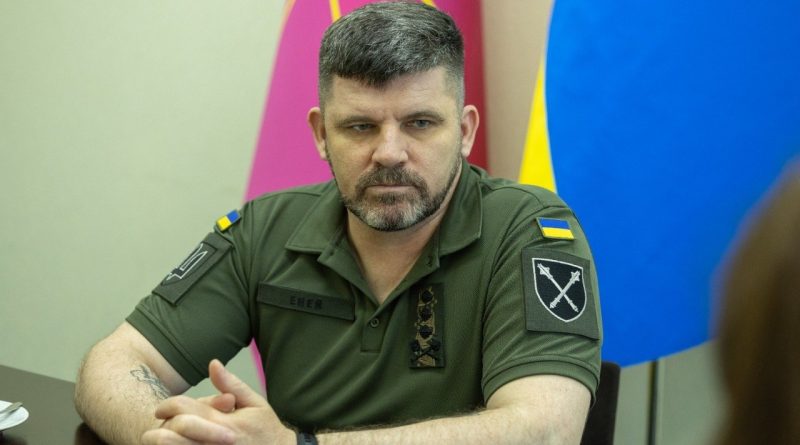
Does Ukraine Have Enough People for War? Chief of General Staff Hnatov Addresses Critical Challenges
As the war in Ukraine continues into its third year, questions about manpower, military strategy, and the prospects for peace negotiations have become increasingly urgent. In a recent comprehensive interview, Ukraine’s Chief of the General Staff, Anatoliy Hnatov, addressed some of the most pressing concerns facing the nation’s defense forces, offering rare insights into the realities on the frontlines and the challenges that lie ahead for Ukrainian military leadership.
The issue of mobilization and human resources has emerged as perhaps the most critical challenge facing Ukraine’s armed forces. With a population significantly smaller than Russia’s, Ukraine has had to carefully balance the need to maintain sufficient troop levels while preserving the workforce necessary to keep the economy functioning. Hnatov acknowledged the difficulty of this balancing act, noting that sustaining a prolonged conflict requires not just weapons and ammunition, but also fresh, well-trained soldiers to replace those who have been wounded, killed, or exhausted by months of continuous combat operations.
The demographic realities facing Ukraine are stark. Before the war began in February 2022, Ukraine had a population of approximately 43 million people. Since then, millions have fled abroad as refugees, while others have been displaced internally. The pool of military-age men available for service has shrunk considerably, and the government has had to implement increasingly strict mobilization measures to maintain force levels. Recent legislation has lowered the mobilization age and tightened rules around military service exemptions, sparking intense debate within Ukrainian society about fairness and the burden of sacrifice.
On the frontlines, Hnatov described a situation of intense pressure along multiple axes of the conflict. Russian forces continue to employ their numerical advantage, often launching waves of infantry assaults backed by artillery and drone strikes. Ukrainian defenders have proven remarkably resilient, using their knowledge of the terrain and superior tactical flexibility to inflict disproportionate casualties on attacking forces. However, the constant attrition takes its toll, and maintaining defensive positions requires a steady rotation of fresh units that is becoming increasingly difficult to sustain.
The question of peace negotiations remains fraught with complexity. Hnatov explained that while Ukraine remains open to diplomatic solutions, the current positions of the parties remain far apart. Russia’s demands have been characterized as requiring Ukrainian capitulation rather than genuine compromise, while Ukraine insists on the restoration of its territorial integrity and security guarantees that would prevent future aggression. International mediators have struggled to find common ground, and the military situation on the ground continues to heavily influence the diplomatic calculus on both sides.
Western military support remains crucial to Ukraine’s defensive capabilities. NATO allies have provided billions of dollars worth of equipment, from advanced air defense systems to artillery ammunition and armored vehicles. However, Hnatov noted that the flow of aid has been inconsistent, with political debates in donor countries sometimes causing delays that have real consequences on the battlefield. The recent approval of additional American military assistance following months of congressional gridlock was welcomed, but Ukrainian commanders emphasize that sustained, predictable support is essential for long-term planning.
Looking ahead, Hnatov identified several key challenges that Ukrainian forces must address. Electronic warfare has become increasingly sophisticated, with both sides developing new technologies to jam communications and disable drones. The proliferation of unmanned aerial vehicles has transformed the battlefield, making it nearly impossible for large troop concentrations or equipment to move without detection. Adapting to these new realities requires constant innovation and training, stretching already limited resources.
Perhaps most significantly, Hnatov emphasized that the war’s outcome will ultimately depend on societal resilience as much as military capability. Ukraine’s ability to maintain national unity, continue economic production, and sustain the morale of both soldiers and civilians will determine whether the country can outlast Russian aggression. The Chief of General Staff expressed confidence in Ukraine’s determination but acknowledged that the path ahead remains long and uncertain, requiring continued sacrifice from a nation that has already given so much in defense of its sovereignty and independence.