
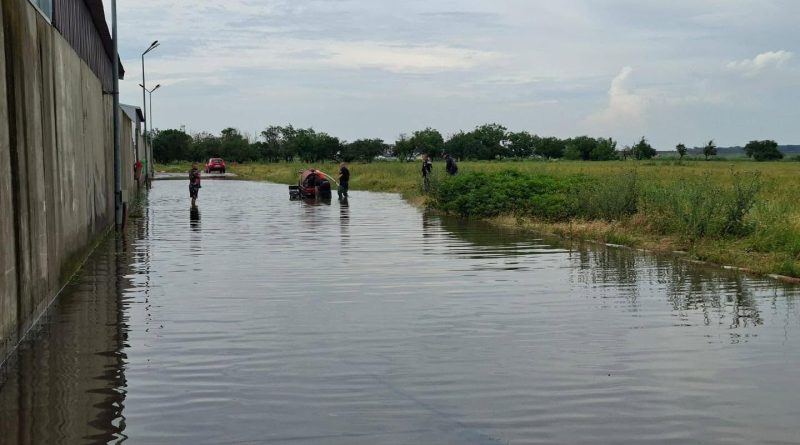
Heavy Rains and Floods Isolate Dozens of Communities Across Romania
Severe weather conditions have wreaked havoc across multiple regions of Romania, leaving dozens of communities completely cut off from the outside world as torrential rains triggered widespread flooding and dangerous landslides. The extreme weather event has disrupted daily life for thousands of residents, damaged critical infrastructure, and prompted emergency responses from local and national authorities struggling to reach isolated populations in affected areas.
In one of the hardest-hit counties, a massive landslide caused by the saturated soil completely destroyed a section of local roadway, severing the primary connection between several villages and larger urban centers. The collapse of the road infrastructure has left residents without access to essential services, including medical facilities, schools, and commercial centers. Emergency crews have been working around the clock to assess the damage and establish alternative routes, though officials warn that full restoration of the road network could take weeks or even months depending on the extent of structural damage to the underlying terrain.
Romania has historically been vulnerable to severe flooding events, particularly during spring and early summer months when heavy precipitation combines with snowmelt from the Carpathian Mountains. The country’s geography, characterized by steep mountain slopes that quickly channel water into low-lying valleys and plains, creates conditions conducive to rapid and dangerous flash flooding. Over the past two decades, Romania has experienced several catastrophic flood events, including the devastating floods of 2005 and 2010 that claimed dozens of lives and caused billions of euros in damage to homes, agricultural land, and public infrastructure.
Local authorities have activated emergency protocols across the affected regions, deploying rescue teams, military personnel, and specialized equipment to reach stranded communities. Helicopters have been utilized to deliver essential supplies including food, drinking water, and medicine to villages that remain completely inaccessible by road. Emergency shelters have been established in schools and community centers to accommodate families whose homes have been damaged or destroyed by floodwaters. The Romanian government has also mobilized resources from neighboring counties to support the relief effort, demonstrating the scale of the disaster response required.
Environmental experts have pointed to climate change as a contributing factor to the increasing frequency and intensity of extreme weather events in the region. Rising global temperatures lead to higher atmospheric moisture content, which in turn produces more intense precipitation events. Studies conducted by European climate research institutions have indicated that Central and Eastern European countries, including Romania, can expect to experience more frequent flooding episodes in the coming decades. This reality has prompted calls for increased investment in flood prevention infrastructure, including improved drainage systems, reinforced riverbanks, and early warning systems capable of alerting communities before dangerous conditions develop.
The economic impact of such flooding events extends far beyond immediate property damage. Agricultural communities in rural Romania, which rely heavily on seasonal crop production, face potential devastation when floodwaters inundate fields during critical growing periods. Livestock losses, destruction of stored grain and equipment, and contamination of soil can set farming families back years financially. Additionally, the tourism sector, particularly important in scenic mountain regions, suffers when access roads are damaged and accommodations are destroyed. Local governments, often operating with limited budgets, struggle to fund both immediate emergency response and long-term reconstruction efforts.
Romanian officials have urged residents in flood-prone areas to remain vigilant and follow official guidance regarding evacuation orders and safety protocols. Weather forecasters have indicated that additional rainfall is expected in some regions over the coming days, raising concerns about the potential for further deterioration of already unstable slopes and continued rising water levels in rivers and streams. Citizens have been advised to avoid crossing flooded roads, to prepare emergency supply kits, and to maintain communication with local authorities. As the country continues to grapple with the immediate crisis, discussions are already beginning about necessary long-term investments in infrastructure resilience and disaster preparedness to better protect vulnerable communities from future extreme weather events.