
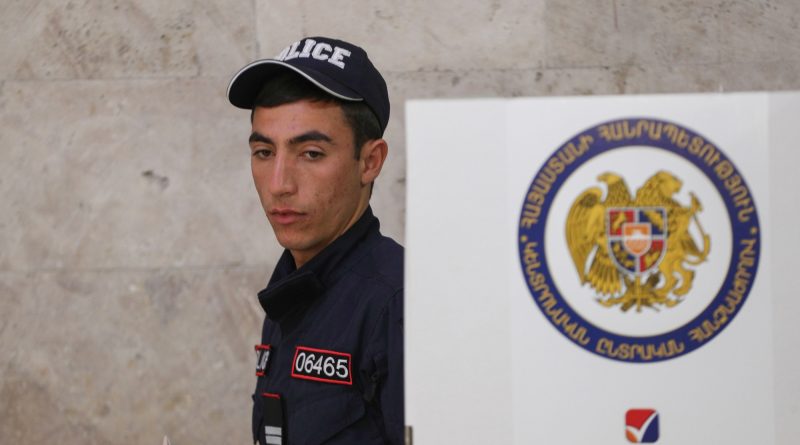
Armenian Businessman with Russian Ties Arrested on Suspicion of Voter Transportation Scheme
Armenian authorities have detained a prominent businessman with significant connections to Russia on suspicion of organizing illegal voter transportation during recent electoral activities. The individual in question serves as Vice President of the Armenian Business Council of Russia, a position that has placed him at the intersection of economic relations between the two historically allied nations. The arrest marks a significant development in Armenia’s ongoing efforts to combat electoral fraud and maintain the integrity of its democratic processes.
The detention has sparked considerable attention both domestically and internationally, given the suspect’s high-profile position in Armenian-Russian business circles. The Armenian Business Council of Russia serves as a key organization facilitating trade and investment between the two countries, making its vice president a notable figure in bilateral economic relations. Authorities have not yet released extensive details about the specific allegations, but voter transportation schemes typically involve organized efforts to bring voters to polling stations in exchange for payment or other incentives, which is illegal under Armenian electoral law.
This arrest comes at a particularly sensitive time in Armenian politics, as the country continues to navigate complex relationships with its neighbors and traditional allies. Since the 2018 Velvet Revolution that brought current Prime Minister Nikol Pashinyan to power, Armenia has been working to strengthen its democratic institutions and reduce corruption. The government has made electoral integrity a cornerstone of its reform agenda, implementing various measures to prevent vote-buying and other forms of electoral manipulation that were reportedly common in previous administrations.
The relationship between Armenia and Russia has undergone significant strain in recent years, particularly following the 2020 Nagorno-Karabakh war and subsequent geopolitical shifts. While Russia remains Armenia’s primary security partner through the Collective Security Treaty Organization (CSTO), many Armenians have expressed frustration with Moscow’s perceived failure to provide adequate support during the conflict with Azerbaijan. This has led to a gradual diversification of Armenia’s foreign policy, with the government seeking closer ties with Western nations and the European Union while attempting to maintain working relations with Russia.
Electoral fraud through voter transportation schemes has been a persistent challenge in post-Soviet states, where such practices became entrenched during the turbulent 1990s. These schemes typically involve wealthy individuals or political operatives arranging buses or other transportation to bring voters, often from rural areas, to polling stations. Participants may receive cash payments, goods, or other benefits in exchange for their votes. International election monitoring organizations, including the OSCE’s Office for Democratic Institutions and Human Rights, have documented such practices across the region and consistently called for stronger enforcement measures.
The Armenian government has implemented several reforms to combat electoral fraud since 2018, including the introduction of improved voter identification systems, enhanced training for election officials, and stricter penalties for violations. The country has also invited international observers to monitor elections and has worked with organizations such as the Council of Europe to strengthen its electoral framework. Despite these efforts, challenges remain, and the current arrest suggests that authorities are taking a more aggressive stance against those suspected of attempting to undermine electoral integrity.
Legal experts note that if convicted of organizing voter transportation schemes, the businessman could face significant penalties under Armenian law, including substantial fines and imprisonment. The case may also have broader implications for Armenian-Russian business relations, potentially creating diplomatic tensions if Moscow perceives the arrest as politically motivated. However, Armenian officials have consistently maintained that their anti-corruption efforts are based solely on evidence and the rule of law, regardless of the suspects’ connections or status. The investigation is ongoing, and additional details are expected to emerge as prosecutors build their case. The outcome of this high-profile detention will be closely watched as a test of Armenia’s commitment to democratic principles and judicial independence.