
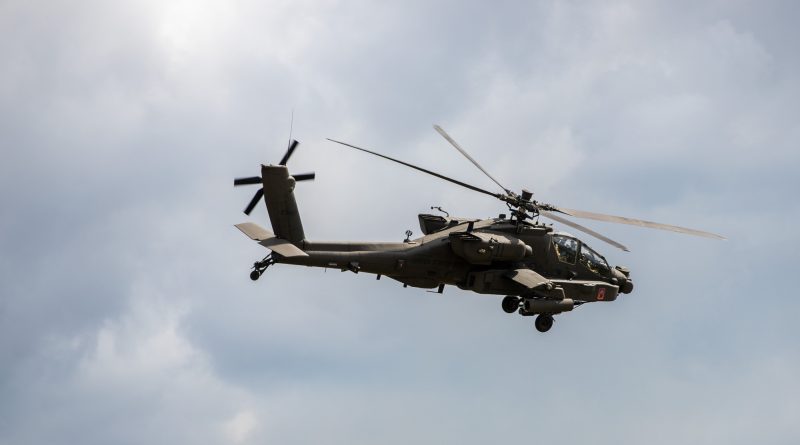
US Loses Apache Attack Helicopter Near Strait of Hormuz in First Such Incident Since Conflict with Iran Began
The United States military has suffered its first loss of an AH-64 Apache attack helicopter since the outbreak of hostilities with Iran, according to a report by The New York Times. The incident occurred in the strategically critical waters near the Strait of Hormuz, one of the world’s most important maritime chokepoints through which approximately 20 percent of global oil supplies pass daily. While the exact circumstances surrounding the crash remain under investigation, military officials have confirmed that both crew members were successfully rescued from the scene.
The loss of the Apache helicopter marks a significant moment in the ongoing military tensions between the United States and Iran. The AH-64 Apache is considered one of the most advanced and formidable attack helicopters in the world, featuring sophisticated targeting systems, heavy armor protection, and the capability to operate in virtually all weather conditions. Each unit costs approximately $35 million, representing not only a substantial financial loss but also a tactical setback in the region where American forces have been conducting operations to counter Iranian military activities and protect international shipping lanes.
The Strait of Hormuz has long been a flashpoint for US-Iranian tensions, serving as the narrow passage connecting the Persian Gulf to the Gulf of Oman and the broader Arabian Sea. Iran has repeatedly threatened to close the strait in response to Western sanctions and military pressure, a move that would have devastating consequences for global energy markets. The waterway is barely 21 miles wide at its narrowest point, making it an ideal location for Iran’s asymmetric warfare capabilities, including fast attack boats, anti-ship missiles, and sea mines. American military presence in the region has been maintained specifically to ensure freedom of navigation through this vital corridor.
Military analysts note that helicopter operations in the Persian Gulf region present unique challenges due to extreme heat, humidity, and the corrosive effects of salt air on aircraft systems. The Apache fleet has generally maintained an excellent safety record throughout its decades of service, having been deployed extensively in conflicts ranging from the Gulf War in 1991 to operations in Iraq and Afghanistan. However, the demanding environment of the Middle East has historically taken a toll on both personnel and equipment. The circumstances of this particular crash—whether mechanical failure, hostile action, or environmental factors—will likely be the subject of intense scrutiny by military investigators.
The successful rescue of both crew members represents a crucial operational success amid the loss of the aircraft. Search and rescue capabilities in the region have been significantly enhanced following previous incidents, with US Navy vessels and Air Force assets maintaining constant readiness for such emergencies. The identities of the rescued crew members have not been released pending notification of their families, following standard military protocol. Their survival ensures that valuable operational intelligence and firsthand accounts of the incident can be gathered to prevent similar occurrences in the future.
The timing of this incident comes against a backdrop of escalating tensions throughout the Middle East, with Iran-backed militias conducting attacks against American forces and interests across multiple countries. The United States has maintained a substantial military presence in the Persian Gulf region for decades, with major bases in Qatar, Bahrain, Kuwait, and the United Arab Emirates. This forward deployment allows for rapid response to threats against both American personnel and allied nations in the region. The loss of the Apache, while significant, is unlikely to substantially impact overall American military capabilities in the area, given the extensive resources already positioned throughout the Gulf states.
Defense Department officials have indicated that a full investigation into the crash is underway, though they have declined to speculate on potential causes before evidence is thoroughly examined. The Apache’s flight data recorders and any recoverable wreckage will be crucial in determining what led to the helicopter’s loss. As tensions with Iran show no signs of abating, this incident serves as a stark reminder of the risks faced by American service members operating in one of the world’s most volatile regions. The Pentagon has stated that operations in the area will continue uninterrupted despite the loss, reaffirming Washington’s commitment to maintaining security in the strategic waterway.