
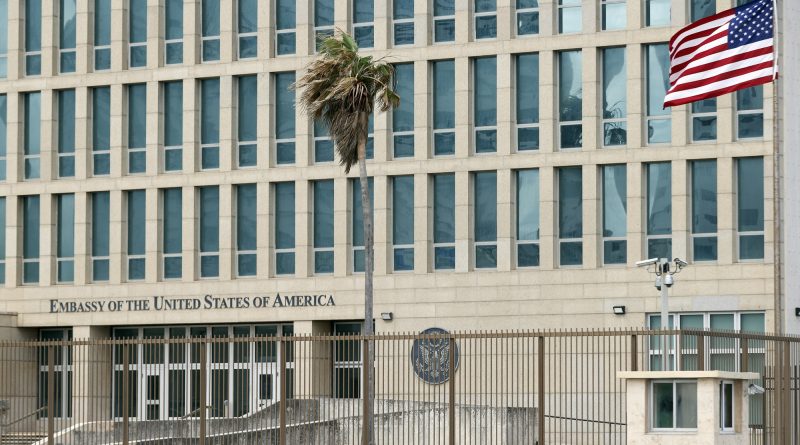
United States Makes Historic First Compensation Payments to Havana Syndrome Victims, Totaling Nearly $3 Million
In a landmark decision that marks a significant shift in how the United States government addresses one of the most mysterious health crises affecting its diplomatic and intelligence personnel, the first compensation payments have been disbursed to victims of the so-called Havana Syndrome. The payments, totaling nearly $3 million, represent the government’s acknowledgment of the suffering endured by those affected by this puzzling condition that has baffled medical experts and intelligence agencies for nearly a decade.
Havana Syndrome first emerged in late 2016 when American diplomats and intelligence officers stationed at the U.S. Embassy in Havana, Cuba, began reporting a constellation of debilitating symptoms. Victims described experiencing intense pressure in the head, severe headaches, dizziness, nausea, difficulty concentrating, and in some cases, hearing strange sounds described as grinding or high-pitched ringing. Some individuals reported long-term cognitive impairment, with symptoms persisting for months or even years after the initial incident. The mysterious nature of these attacks led to widespread speculation about their cause, with theories ranging from sonic weapons to microwave radiation.
The compensation payments come under the HAVANA Act, which was signed into law in 2021 with rare bipartisan support. This legislation authorized the Central Intelligence Agency and the State Department to provide financial support to personnel who suffered brain injuries as a result of these anomalous health incidents. The law represented a crucial step in recognizing the legitimacy of victims’ claims after years of skepticism from some quarters of the government. The recent disbursement of nearly $3 million to affected individuals demonstrates the administration’s commitment to supporting those who have sacrificed their health in service to their country.
Since the initial cases in Cuba, similar incidents have been reported by American personnel in numerous locations around the world, including China, Russia, Austria, Germany, and even within the United States itself. By some estimates, more than 1,500 cases have been reported across various government agencies, though the exact number remains classified. The geographic spread of these incidents has complicated efforts to identify a single source or perpetrator, leading to extensive investigations by multiple intelligence agencies and scientific institutions.
The scientific community remains divided on the exact cause of Havana Syndrome. A 2022 intelligence assessment concluded that it was “very unlikely” a foreign adversary was responsible for the incidents, suggesting instead that many cases could be explained by environmental factors, preexisting medical conditions, or stress. However, this assessment was met with fierce criticism from victims and their advocates, who argued that the government was dismissing their experiences. More recent studies, including research conducted by the National Institutes of Health, have found evidence of measurable differences in brain structure among some affected individuals, lending credence to claims of physical injury.
Russia has emerged as the primary suspect in many unofficial assessments, with some experts pointing to the country’s long history of developing directed-energy weapons and its strategic interest in disrupting American intelligence operations. Former intelligence officials have noted similarities between Havana Syndrome symptoms and the effects of microwave weapons that were reportedly used against the U.S. Embassy in Moscow during the Cold War. However, definitive proof of Russian involvement remains elusive, and Moscow has categorically denied any connection to the incidents.
The compensation payments represent more than just financial relief for the victims; they symbolize a broader acknowledgment of the reality of their suffering. Many affected individuals have reported feeling abandoned by the government they served, struggling to receive adequate medical care and facing skepticism about the legitimacy of their conditions. The disbursement of these funds may help restore trust between the intelligence community and its personnel, while also encouraging others who may have been reluctant to come forward to report their own experiences. As investigations continue and scientific understanding of the condition evolves, the United States government faces the dual challenge of protecting its personnel abroad while seeking to uncover the truth behind one of the most perplexing health mysteries of the modern era.
}