
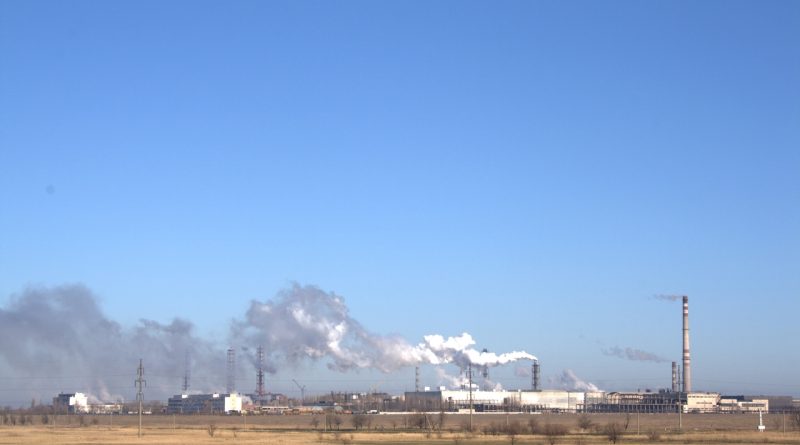
Ukrainian Forces Strike Major Titanium Dioxide Plant in Occupied Crimea
In a significant overnight operation on June 13, Ukrainian Security Service (SBU) drones conducted a targeted strike against the Crimean Titan chemical plant, one of Eastern Europe’s largest titanium dioxide production facilities. The plant, located in the northern part of the Russian-occupied Crimean Peninsula, has been under Moscow’s control since the annexation of Crimea in 2014. Video footage of the attack has emerged, showing multiple explosions illuminating the night sky above the industrial complex.
The Crimean Titan facility, situated near the city of Armyansk close to the administrative border with mainland Ukraine, represents a strategically important industrial asset. Before the conflict, the plant was responsible for producing approximately 100,000 tons of titanium dioxide annually, a critical white pigment used extensively in paint manufacturing, plastics, paper, and various other industrial applications. The facility has been a subject of international attention not only for its economic significance but also for environmental concerns that have plagued the region for years.
The targeting of this particular facility appears to be part of Ukraine’s broader strategy to degrade Russian military logistics and industrial capacity in occupied territories. Titanium dioxide, while primarily a civilian product, has dual-use applications that make it relevant to military manufacturing. The compound is used in various defense applications, including specialized coatings for military equipment and components in certain munitions. By striking such facilities, Ukrainian forces aim to disrupt supply chains that could potentially support the Russian war effort.
The Crimean Titan plant has a troubled environmental history that adds another dimension to this strike. In 2018, the facility was at the center of a major ecological crisis when an acidic cloud formed over the region, reportedly affecting thousands of residents in nearby communities. Ukrainian authorities accused the plant’s Russian operators of negligent maintenance and improper handling of chemical waste. The incident led to evacuations and raised serious concerns about the safety protocols at the aging Soviet-era industrial complex. Environmental experts have long warned that the facility poses ongoing risks to both local populations and the broader Black Sea ecosystem.
This attack fits into a pattern of increasingly sophisticated Ukrainian drone operations targeting infrastructure deep within Russian-controlled territory. Over the past year, Ukraine has developed and deployed a growing arsenal of domestically produced unmanned aerial vehicles capable of striking targets hundreds of kilometers from the front lines. The SBU, Ukraine’s primary security agency, has been at the forefront of these operations, coordinating strikes against military installations, fuel depots, and industrial facilities across Crimea and western Russia. These operations have demonstrated Ukraine’s ability to project force despite being outmatched in conventional military assets.
The strategic importance of Crimea to Russian military operations cannot be overstated. Since its illegal annexation in 2014, the peninsula has served as a critical logistics hub for Russian forces, particularly for naval operations in the Black Sea. The presence of the Black Sea Fleet headquarters in Sevastopol, combined with various air bases and supply depots, makes Crimea a cornerstone of Russia’s southern military infrastructure. Ukrainian strikes against facilities like Crimean Titan serve multiple purposes: degrading industrial capacity, demonstrating reach into occupied territory, and maintaining pressure on Russian defensive resources that must be diverted to protect rear-area assets.
International observers note that such operations carry significant symbolic weight as well. By consistently targeting facilities in Crimea, Ukraine reinforces its position that the peninsula remains Ukrainian territory under illegal occupation. Western allies have generally supported Ukraine’s right to strike military and dual-use targets within its internationally recognized borders, though some have expressed concerns about potential escalation. As the conflict continues into its third year, operations like the Crimean Titan strike underscore the evolving nature of modern warfare, where precision drone attacks can achieve strategic effects previously requiring conventional air power.