
“Our Goal Is Not Russia Without Gasoline” – Zelensky’s Statehood Day Address Highlights Ukraine’s Ambitious Drone Production Plans
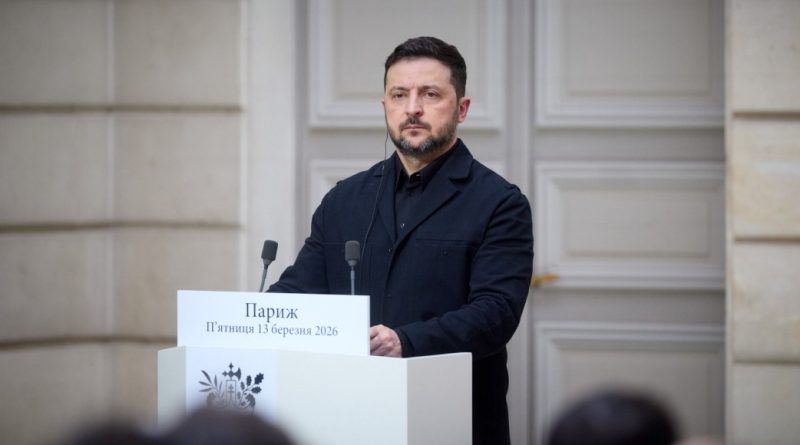
Ukrainian President Volodymyr Zelensky delivered a powerful address on the occasion of Ukraine’s Statehood Day, outlining his vision for the country’s future and announcing ambitious military-industrial plans. The speech, delivered amidst ongoing conflict with Russia, struck a balance between defiance and strategic clarity, emphasizing Ukraine’s commitment to building a robust defense infrastructure while clarifying the nation’s ultimate objectives in the current war.
In one of the most significant announcements of his address, Zelensky revealed that Ukraine, in partnership with allied nations, aims to produce an unprecedented 20 million drones annually. This remarkable figure represents a massive scaling up of Ukraine’s drone manufacturing capabilities, which have already proven crucial in the ongoing conflict. The country has increasingly relied on unmanned aerial vehicles for reconnaissance, strike missions, and defensive operations, making drone warfare a cornerstone of modern Ukrainian military strategy.
The drone production initiative reflects a broader transformation in global warfare that has been accelerated by the Ukrainian conflict. Since the full-scale invasion began in February 2022, drones have emerged as game-changers on the battlefield, providing cost-effective solutions for both offensive and defensive operations. Ukrainian forces have demonstrated remarkable innovation in adapting commercial drones for military purposes, while also developing indigenous designs capable of striking targets deep within Russian territory. The partnership approach mentioned by Zelensky suggests that Western allies will play a significant role in technology transfer, component supply, and possibly joint manufacturing ventures.
Perhaps the most striking rhetorical moment in Zelensky’s speech came when he declared that “our goal is not Russia without gasoline.” This carefully crafted statement addresses international concerns about the potential escalation of the conflict and clarifies Ukraine’s strategic objectives. Rather than seeking the complete economic destruction or destabilization of Russia, Ukraine’s leadership is signaling that their aims are focused on territorial integrity, sovereignty, and security guarantees. This messaging is particularly significant given recent Ukrainian strikes on Russian oil refineries and energy infrastructure, which have raised questions in some Western capitals about the scope of Ukrainian military operations.
The Statehood Day celebration itself carries deep historical significance for Ukraine. The holiday commemorates the continuous tradition of Ukrainian statehood, tracing back through various historical periods including the medieval Kyivan Rus, the Cossack Hetmanate, and the Ukrainian People’s Republic of 1918. In the context of the current war, the holiday has taken on additional meaning as Ukraine fights to preserve its independence and territorial integrity. Zelensky has consistently used such occasions to reinforce Ukrainian national identity and historical legitimacy, countering Russian narratives that question Ukraine’s right to exist as an independent nation.
The ambitious 20-million-drone target also reflects the growing “drone coalition” that has formed among Ukraine’s Western partners. Countries including the United Kingdom, Latvia, and others have pledged to support Ukraine’s drone capabilities through various means, from direct donations to manufacturing assistance. The scale of production announced by Zelensky would require significant industrial capacity, suggesting that plans may include establishing new manufacturing facilities both within Ukraine and in partner countries. This distributed production model would help protect against Russian strikes targeting Ukrainian defense industries while ensuring a steady supply of these crucial weapons systems.
As Ukraine enters its fourth year of full-scale war, Zelensky’s Statehood Day message represents both a celebration of resilience and a roadmap for continued resistance. The emphasis on domestic production capabilities signals Ukraine’s intention to reduce dependence on foreign military aid over time, while the clarification of war aims appears designed to maintain Western support by addressing concerns about potential escalation. With drone warfare continuing to evolve rapidly, Ukraine’s investment in this technology may well shape the future of military conflicts worldwide, transforming the country from a recipient of military aid into a significant defense producer in its own right.