
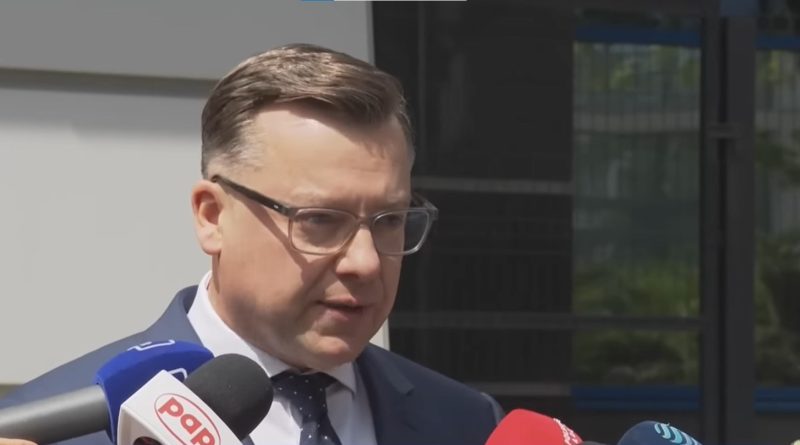
Former Ukrainian Deputy Interior Minister Detained in Poland on Bribery Charges
Polish authorities have detained Volodymyr Berdykovsky, a former deputy head of Ukraine’s Ministry of Internal Affairs, on suspicion of offering a bribe to a Polish government official. The arrest marks a significant development in ongoing anti-corruption efforts across Eastern Europe and raises questions about the conduct of former high-ranking Ukrainian officials abroad. Berdykovsky served in his position during the tenure of Yuriy Lutsenko, who headed the ministry before later becoming Ukraine’s Prosecutor General.
According to Polish investigators, Berdykovsky allegedly attempted to provide an improper benefit to a Polish civil servant, though the specific details of the alleged transaction and the identity of the targeted official have not been publicly disclosed. The case is being handled by Polish law enforcement agencies, which have been increasingly vigilant about corruption cases involving foreign nationals, particularly those with political backgrounds from neighboring countries. Polish authorities have maintained strict protocols regarding such investigations as part of the country’s commitment to European Union anti-corruption standards.
The detention comes at a particularly sensitive time in Polish-Ukrainian relations, which have been characterized by both strong cooperation and occasional tensions. Since Russia’s full-scale invasion of Ukraine in February 2022, Poland has emerged as one of Kyiv’s most steadfast allies, accepting millions of Ukrainian refugees and serving as a crucial logistics hub for Western military and humanitarian aid. However, this cooperation has not prevented Polish authorities from pursuing legal cases against Ukrainian nationals when evidence warrants investigation, demonstrating the independence of Poland’s judicial system.
Yuriy Lutsenko, under whom Berdykovsky served, has been a controversial figure in Ukrainian politics. Lutsenko headed the Ministry of Internal Affairs from 2007 to 2010 during the presidency of Viktor Yushchenko and later served as Prosecutor General from 2016 to 2019 under President Petro Poroshenko. His tenure was marked by various reform attempts and political controversies, including his involvement in cases that later became subjects of international attention during the Trump administration’s dealings with Ukraine. The ministry he once led has undergone significant transformations since Ukraine’s 2014 Revolution of Dignity, with successive governments attempting to root out corruption and professionalize law enforcement.
Corruption has been a persistent challenge for Ukraine throughout its post-Soviet history, with international observers and domestic reformers consistently identifying it as one of the primary obstacles to the country’s European integration aspirations. The European Union has repeatedly emphasized the importance of anti-corruption measures as a precondition for Ukraine’s eventual membership, and Kyiv has established numerous institutions, including the National Anti-Corruption Bureau (NABU) and the Specialized Anti-Corruption Prosecutor’s Office (SAPO), to address these concerns. The arrest of a former high-ranking official abroad underscores that accountability can extend beyond Ukraine’s borders.
Polish-Ukrainian law enforcement cooperation has expanded significantly in recent years, with both countries sharing intelligence and coordinating on cross-border criminal investigations. Poland’s Central Anti-Corruption Bureau (CBA) and other agencies have developed robust mechanisms for detecting and prosecuting bribery cases, regardless of the nationality or former status of the individuals involved. This case will likely be closely watched by anti-corruption advocates in both countries as a test of the region’s commitment to holding former officials accountable for alleged misconduct.
The outcome of Berdykovsky’s case could have broader implications for how former Ukrainian officials conduct themselves abroad and may serve as a deterrent against corruption involving cross-border elements. Legal experts note that Poland’s membership in the European Union means that any conviction would be recognized across the bloc, potentially limiting the individual’s freedom of movement throughout Europe. As the investigation continues, both Polish and Ukrainian authorities have remained relatively tight-lipped about additional details, suggesting that the case may still be developing and that further charges or revelations could emerge in the coming weeks.