
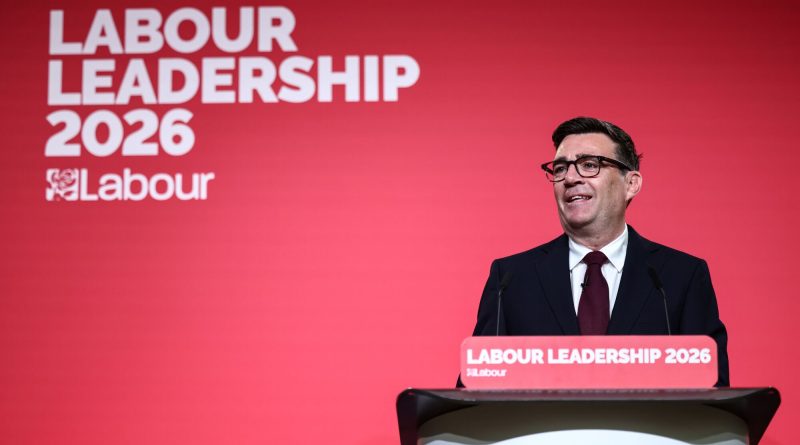
Andy Burnham Replaces Starmer as Labour Leader and Set to Become Next Prime Minister
In a dramatic political shift that has sent shockwaves through British politics, Andy Burnham has been confirmed as the new leader of the Labour Party, replacing Sir Keir Starmer in a move that positions him to become the United Kingdom’s next Prime Minister. The formal confirmation of Burnham’s appointment to the nation’s highest office is expected to take place on Monday, July 20th, marking a significant turning point in the country’s political landscape and the beginning of a new chapter for the Labour movement.
Andy Burnham, who has served as the Mayor of Greater Manchester since 2017, brings extensive governmental experience to his new role. His political career spans over two decades, during which he has held several cabinet positions under previous Labour governments. Burnham served as Secretary of State for Health from 2009 to 2010 under Gordon Brown’s administration, and prior to that held positions as Chief Secretary to the Treasury and Secretary of State for Culture, Media and Sport. His tenure as Greater Manchester’s metro mayor has been widely praised for his handling of regional issues, particularly his vocal advocacy during the COVID-19 pandemic when he publicly clashed with the Conservative government over lockdown support for northern regions.
The transition from Starmer to Burnham represents a notable shift in Labour’s political direction. Sir Keir Starmer, who took over the party leadership in April 2020 following Jeremy Corbyn’s departure after Labour’s devastating defeat in the 2019 general election, had worked to rebuild the party’s image and distance it from the more radical left-wing policies of his predecessor. Under Starmer’s leadership, Labour had made significant gains in public opinion polls and local elections, positioning itself as a credible alternative to the Conservative government. However, internal party dynamics and questions about the party’s future direction have ultimately led to this change in leadership.
Burnham’s rise to the top position in British politics reflects broader trends within the Labour Party and the country as a whole. His background as a working-class politician from the north of England resonates with many traditional Labour voters who felt alienated during the Blair and subsequent eras. Born in Liverpool in 1970 and raised in Culcheth, Warrington, Burnham attended a comprehensive school before studying English at Fitzwilliam College, Cambridge. This combination of northern roots and academic achievement has allowed him to bridge different constituencies within the Labour coalition, appealing to both the party’s traditional base and more progressive urban voters.
The Greater Manchester mayoralty served as an effective platform for Burnham to demonstrate his executive capabilities and maintain a high national profile. During his time in the role, he championed causes such as ending homelessness, improving public transportation, and devolving more powers to regional authorities. His “King of the North” nickname, earned during his standoff with the Westminster government over COVID-19 restrictions and financial support, cemented his reputation as a politician willing to fight for northern communities. This regional advocacy has helped reshape debates about the balance of power between London and other parts of England, an issue that resonates deeply with voters outside the capital.
As Burnham prepares to enter 10 Downing Street, he faces a formidable array of challenges that will test his leadership abilities. The British economy continues to grapple with the aftermath of Brexit, ongoing cost-of-living pressures, and structural issues in key sectors including healthcare, housing, and infrastructure. The National Health Service, an area where Burnham has particular expertise from his time as Health Secretary, faces unprecedented backlogs and staffing shortages. Additionally, questions of national unity persist, with Scotland’s independence movement remaining a significant political force and debates about the future of the United Kingdom continuing to simmer.
Political analysts suggest that Burnham’s appointment signals Labour’s intention to pursue a more regionally focused and economically interventionist agenda. His experience managing a major metropolitan area, combined with his cabinet-level experience in national government, provides a unique combination of skills that supporters argue makes him well-suited for the challenges ahead. Critics, however, question whether his regional focus can translate effectively to the national stage and whether he can unite the various factions within the Labour Party that have historically been a source of internal conflict. As Monday’s formal confirmation approaches, the nation watches with anticipation to see how Burnham will shape his cabinet and outline his priorities for government in what promises to be a defining moment in contemporary British political history.