
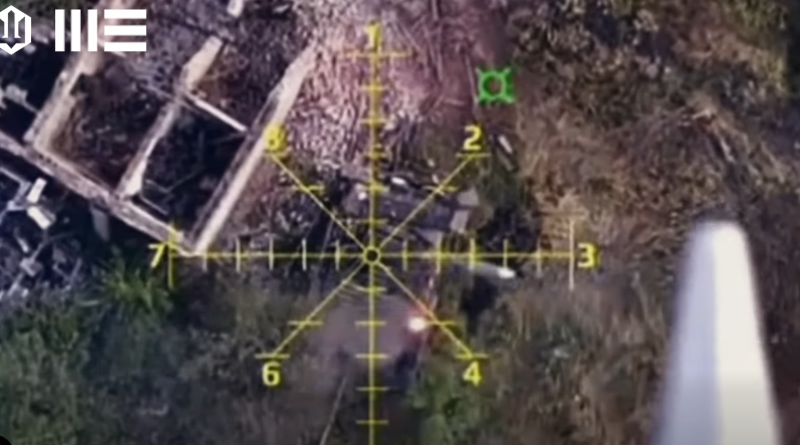
Ukrainian Drones Devastate Russian Armored Assault Near Dobropillia in Massive Tank Offensive
In what military analysts are describing as one of the most significant armored engagements in recent weeks, Ukrainian drone operators have successfully repelled a large-scale Russian tank assault near the town of Dobropillia in the Donetsk region. Footage released by Ukrainian armed forces shows the systematic destruction of Russian armored vehicles and personnel carriers as they attempted to advance through open terrain, highlighting the continued vulnerability of conventional armor to modern unmanned aerial systems in the ongoing conflict.
The engagement, which reportedly took place over several hours, saw Russian forces commit multiple tanks, infantry fighting vehicles, and armored personnel carriers in a coordinated push toward Ukrainian defensive positions. Ukrainian reconnaissance drones first detected the approaching column, allowing defense forces to prepare a devastating response using a combination of first-person view (FPV) kamikaze drones and larger surveillance platforms equipped with ordnance. Video evidence shows at least several vehicles being struck and destroyed, with secondary explosions indicating ammunition cook-offs that left the vehicles completely disabled.
The battle near Dobropillia represents a continuation of Russia’s costly offensive operations in the Donetsk region, where Moscow has been attempting to capture strategic towns and consolidate control over the oblast since the early days of the full-scale invasion launched in February 2022. Dobropillia itself sits at a critical junction in the region’s infrastructure network, making it a valuable target for Russian military planners seeking to disrupt Ukrainian logistics and defensive capabilities. The town has experienced periodic shelling and combat operations throughout the conflict, with civilian populations largely evacuated from the most dangerous areas.
Military experts have noted that Russian forces continue to employ tactics that have proven extremely costly throughout the war, particularly massed armored assaults across open ground without adequate air cover or electronic warfare support. Colonel Petro Chernik, a Ukrainian military analyst, has previously commented that such operations demonstrate a fundamental misunderstanding of the modern battlefield, where small, inexpensive drones can locate and destroy vehicles worth millions of dollars within minutes of their detection. The asymmetric advantage provided by drone technology has fundamentally altered the calculus of armored warfare, forcing militaries worldwide to reconsider decades of tactical doctrine.
The proliferation of drone technology on the Ukrainian battlefield has been one of the defining features of this conflict. Both sides have invested heavily in unmanned systems, with Ukraine benefiting from both domestic production and significant international support. Organizations ranging from official military procurement agencies to volunteer groups have contributed to building a drone fleet that numbers in the thousands of units per month. These systems range from small commercial quadcopters modified to drop grenades to sophisticated long-range platforms capable of striking targets hundreds of kilometers behind enemy lines. The Battle of Dobropillia showcases how effectively these systems can be integrated into a cohesive defensive strategy.
Russian losses in armored vehicles have been staggering since the beginning of the invasion, with independent tracking organizations documenting the destruction of thousands of tanks and other armored fighting vehicles. These losses have forced Moscow to pull increasingly obsolete equipment from long-term storage, including T-62 tanks designed in the 1960s and other Cold War-era systems that offer minimal protection against modern anti-tank weapons. The footage from Dobropillia appears to show more contemporary T-72 and T-80 variants, suggesting that Russia continues to commit its better-equipped units to offensive operations despite the high attrition rate.
The successful defense near Dobropillia provides Ukrainian forces with a tactical victory during a period of intense pressure along multiple fronts in the Donetsk region. Military observers note that while such engagements do not fundamentally alter the strategic balance of the conflict, they impose significant material and personnel costs on Russian forces while demonstrating the continued effectiveness of Ukrainian defensive capabilities. As the war approaches its fourth year, the ability of both sides to sustain such losses while maintaining combat effectiveness will likely prove decisive in determining the conflict’s ultimate outcome. The Ukrainian military continues to call for additional Western support, particularly in air defense systems and long-range strike capabilities, to complement their highly effective drone operations.