
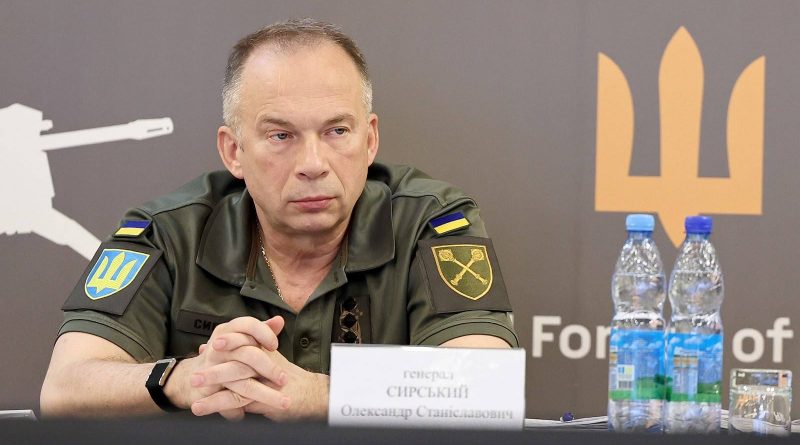
Ukrainian Air Assault and Navy Commanders Publicly Back Armed Forces Chief Syrskyi Amid Growing Protests
In a significant display of military unity during a turbulent period, the commanders of Ukraine’s Air Assault Forces and Naval Forces have issued public statements supporting Colonel-General Oleksandr Syrskyi, the Commander-in-Chief of Ukraine’s Armed Forces. The declarations come as protests continue across the country and tensions rise over military leadership decisions during the ongoing war with Russia.
Lieutenant General Oleh Apostol, commander of Ukraine’s Air Assault Forces, directly addressed military personnel in his statement, urging them not to allow themselves to be drawn into political disputes. His message emphasized the importance of maintaining focus on the primary mission of defending Ukraine rather than becoming entangled in domestic political controversies that could undermine military cohesion and effectiveness during wartime operations.
The public backing from senior military commanders represents a notable development in Ukrainian civil-military relations, which have faced increasing strain as the war enters its fourth year. Syrskyi, who assumed command of Ukraine’s armed forces in February 2024 after the dismissal of the widely popular General Valerii Zaluzhnyi, has faced criticism from various quarters regarding tactical decisions and the conduct of defensive operations. The transition in military leadership at such a critical juncture naturally invited scrutiny, and Syrskyi has had to navigate both battlefield challenges and questions about his strategic approach.
The protests that prompted these statements reflect broader societal tensions in Ukraine, where the prolonged conflict has placed enormous pressure on military families, veterans, and the general population. Issues surrounding mobilization policies, troop rotation schedules, and the treatment of soldiers have sparked public demonstrations in recent months. Some protesters have directed their frustrations toward military leadership, creating a complex environment where commanders must balance operational security with public accountability.
Ukraine’s Air Assault Forces, known as the DShV from their Ukrainian acronym, have played a crucial role throughout the conflict. These elite units have been deployed in some of the most challenging combat situations, from the defense of Kyiv in the early days of the invasion to ongoing operations along the eastern front. General Apostol’s decision to speak publicly on matters of military leadership unity carries significant weight given the reputation and combat record of the forces under his command. Similarly, the Ukrainian Navy, though operating with limited resources following the loss of its flagship and major vessels, has conducted innovative operations in the Black Sea that have challenged Russian naval dominance.
The call for military personnel to remain above political disputes echoes longstanding principles of professional armed forces in democratic societies. Throughout Ukraine’s post-independence history, the military has generally maintained political neutrality, though the current circumstances present unprecedented challenges. The ongoing invasion has transformed the armed forces into a central institution of national survival, elevating military leaders to positions of enormous public attention and, inevitably, political significance. Experts on civil-military relations note that maintaining clear boundaries between military operations and political debates becomes increasingly difficult during prolonged conflicts when military decisions have immediate and visible impacts on civilian life.
The timing of these statements also coincides with critical moments in the war, as Ukrainian forces continue defensive operations while Western allies debate the scope and nature of continued military support. International observers have noted that internal divisions within Ukraine could potentially affect the confidence of partner nations providing military and financial assistance. The visible support from senior commanders for the military chain of command may serve to reassure both domestic audiences and international partners about the stability and professionalism of Ukraine’s defense establishment.
As Ukraine navigates this challenging period, the relationship between military leadership, civilian government, and public opinion will remain a delicate balance. The statements from Generals Apostol and the Navy commander underscore the military establishment’s desire to project unity and focus amid external threats and internal pressures. Whether these declarations will quell the protests or address the underlying grievances that sparked them remains to be seen, but they represent a clear message that Ukraine’s senior military leaders intend to present a united front as the nation continues its defense against Russian aggression.