
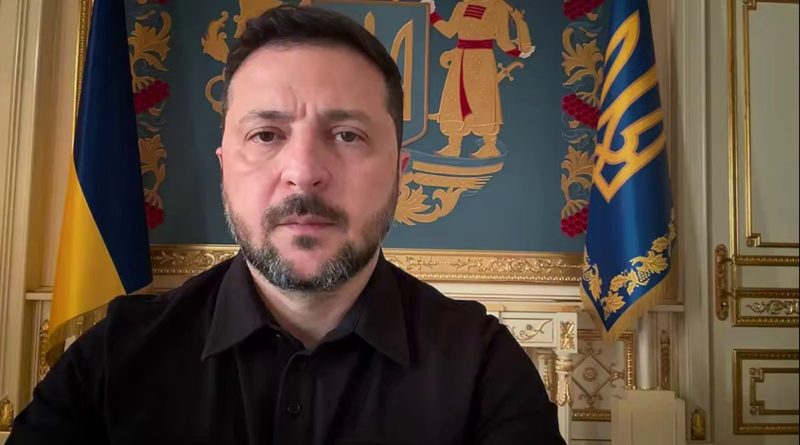
Zelensky Outlines Ukraine’s Agenda for Upcoming G7 and NATO Summits: Security, Drones, and Partnership
Ukrainian President Volodymyr Zelensky has revealed the key topics that Ukraine intends to raise during the upcoming G7 and NATO summits, signaling a comprehensive diplomatic push aimed at strengthening Western support for Kyiv’s defense efforts. The Ukrainian leader emphasized that discussions will center on European security architecture, the innovative Drone Deals program, and broader partnership frameworks that could reshape the continent’s defense landscape for years to come.
The announcement comes at a critical juncture in the ongoing conflict, as Ukraine continues to seek enhanced military assistance and concrete security guarantees from its Western allies. With the war now in its third year, Kyiv has increasingly focused on securing long-term commitments rather than ad-hoc aid packages, recognizing that sustainable support mechanisms are essential for both immediate defense needs and eventual reconstruction efforts.
The Drone Deals program, which Zelensky specifically mentioned as a summit priority, represents one of Ukraine’s most ambitious defense initiatives. This program aims to establish partnerships with Western nations for the co-production and supply of unmanned aerial vehicles, which have proven decisive on the modern battlefield. Ukraine has emerged as a global leader in drone warfare innovation, developing cost-effective solutions that have neutralized significantly more expensive Russian military equipment. The program seeks to formalize these technological advances into structured international agreements that would ensure consistent supply chains and knowledge sharing between Ukraine and its partners.
European security, the other major topic on Ukraine’s summit agenda, encompasses a broad range of issues that extend far beyond the immediate conflict. Western security analysts have noted that the war in Ukraine has fundamentally altered European defense thinking, prompting NATO members to increase military spending and reconsider long-held assumptions about collective security. Finland and Sweden’s recent NATO accession, directly prompted by Russian aggression, demonstrates how profoundly the conflict has reshaped the alliance’s geography and strategic calculations.
The G7 summit, which brings together leaders from the United States, United Kingdom, France, Germany, Italy, Canada, and Japan, has become an increasingly important forum for coordinating Ukraine-related policies. These nations have collectively provided the bulk of military and financial assistance to Kyiv, and their unified approach has been crucial in maintaining pressure on Russia through economic sanctions. Previous G7 meetings have resulted in significant commitments, including the controversial decision to utilize frozen Russian assets to fund Ukrainian reconstruction, a move that generated approximately $50 billion in available resources.
NATO’s involvement remains equally critical, though Ukraine’s path to full membership continues to generate debate among alliance members. While the 2023 Vilnius summit affirmed Ukraine’s eventual membership, specific timelines and conditions remain undefined. The upcoming summit presents an opportunity for Zelensky to push for more concrete commitments, potentially including enhanced military training programs, intelligence sharing arrangements, and accelerated integration into NATO’s command structures. Defense experts suggest that even without immediate membership, deeper NATO engagement could significantly enhance Ukraine’s defensive capabilities and deterrence posture.
The timing of these summits coincides with ongoing discussions about potential peace negotiations, adding another layer of complexity to the diplomatic landscape. Western leaders have emphasized that any settlement must respect Ukrainian sovereignty and territorial integrity, while also acknowledging that sustainable peace requires addressing broader European security concerns. Zelensky’s focus on security frameworks suggests Ukraine is thinking beyond the immediate conflict toward establishing structures that would prevent future aggression and guarantee the country’s long-term stability.
As Ukraine prepares for these high-stakes diplomatic engagements, the outcomes could have far-reaching implications not only for the conflict’s trajectory but for the entire European security order. The combination of practical military cooperation through programs like Drone Deals and strategic discussions about collective defense mechanisms reflects Kyiv’s sophisticated approach to leveraging international partnerships. With winter approaching and military operations continuing, the decisions made at these summits will likely influence both battlefield dynamics and the broader geopolitical balance in Eastern Europe for the foreseeable future.