
Riots Erupt in Northern Ireland Following Knife Attack by Sudanese Refugee
Violent disturbances have broken out in Belfast, Northern Ireland, following a knife attack on June 8th in which a Sudanese refugee allegedly stabbed a 40-year-old local man, leaving him with serious injuries to his eyes, neck, and back. The incident has sparked widespread protests and civil unrest in several neighborhoods of the Northern Irish capital, reigniting debates about immigration policy, refugee integration, and community tensions in a region with a complex history of sectarian conflict.
The victim, whose identity has not been publicly released, was reportedly attacked in a residential area of Belfast and was immediately transported to a local hospital where he underwent emergency surgery. Medical officials have described his injuries as severe but not life-threatening, with particular concern about the wounds to his eyes that may result in permanent vision impairment. Local police have taken the suspected attacker into custody, and an investigation into the circumstances surrounding the assault is currently underway. Authorities have urged calm while they work to establish the full facts of the case.
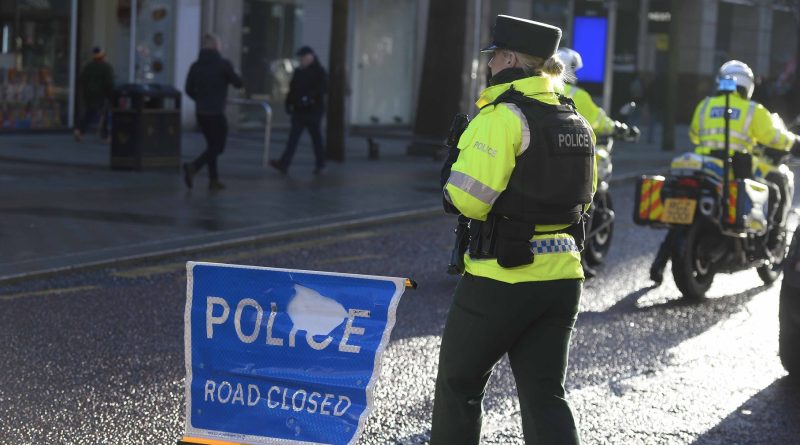
The aftermath of the attack saw crowds gathering in multiple Belfast neighborhoods, with some demonstrations turning violent as protesters clashed with police and targeted properties they believed were associated with immigrant communities. Riot police were deployed to maintain order, and several arrests have been made in connection with the disturbances. Shop windows were smashed, vehicles were set ablaze, and there were reports of projectiles being thrown at law enforcement officers. The Police Service of Northern Ireland (PSNI) has increased patrols throughout the city and called for community leaders to help de-escalate the situation.
Northern Ireland has experienced a significant increase in its immigrant and refugee population over the past two decades, transforming what was historically a relatively homogeneous society divided primarily along Catholic and Protestant lines. The region has welcomed refugees from various conflict zones, including Sudan, Syria, and Afghanistan, as part of the United Kingdom’s broader asylum commitments. However, this demographic shift has not been without challenges, as some communities have struggled to adapt to increasing cultural diversity. Integration programs exist but have been criticized by both immigrant advocacy groups, who argue they are underfunded, and by some local residents who feel their concerns about rapid change are being ignored.
The violence in Belfast echoes similar incidents that have occurred across Europe in recent years, where crimes allegedly committed by immigrants or refugees have sparked backlash and sometimes violent protests. Experts on social cohesion and migration note that such incidents often become flashpoints that expose underlying tensions that may have been simmering beneath the surface. Dr. Sarah Mitchell, a criminologist at Queen’s University Belfast, has observed that individual criminal acts are sometimes exploited by extremist groups to promote anti-immigrant sentiment, while simultaneously, legitimate community concerns about safety and integration can be dismissed as xenophobia. Finding a balanced approach to these complex issues remains one of the most significant challenges facing European societies.
Northern Ireland’s unique political landscape adds another layer of complexity to the current situation. The region spent decades mired in sectarian conflict known as “The Troubles,” which claimed over 3,500 lives before the 1998 Good Friday Agreement brought an uneasy peace. While violence between Catholic nationalists and Protestant unionists has largely subsided, the social infrastructure built around division – including so-called “peace walls” separating communities – means that Belfast residents are no strangers to tension and territorial conflict. Some analysts suggest that the mechanisms developed to manage sectarian division have not been effectively adapted to address new forms of community friction involving immigrant populations.
Political leaders from across the spectrum have condemned both the initial knife attack and the subsequent rioting. First Minister Michelle O’Neill called for calm and emphasized that justice must be pursued through proper legal channels rather than street violence. Meanwhile, opposition figures have demanded more robust action on both immigrant screening processes and community safety measures. The incident is likely to intensify political debate as Northern Ireland continues to navigate its post-Brexit relationship with the rest of the United Kingdom and the European Union, with immigration policy remaining a particularly contentious issue. As Belfast works to restore order, the coming days will be crucial in determining whether community leaders can bridge divides and prevent further escalation of what has become a volatile and emotionally charged situation.