
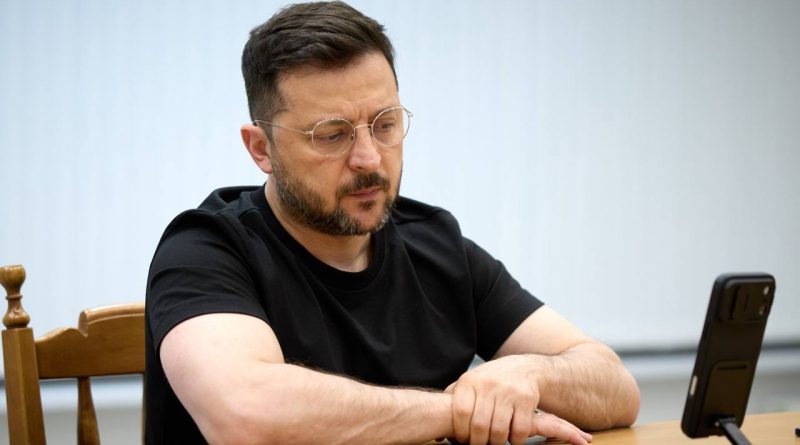
Zelensky Reveals Details of Airport Meeting with Trump’s Special Envoys Witkoff and Kushner
Ukrainian President Volodymyr Zelensky has disclosed new details about his recent conversation with two of former President Donald Trump’s most trusted envoys, Steve Witkoff and Jared Kushner. The meeting took place under unusual circumstances during a technical stopover at the airport in Chisinau, the capital of Moldova, highlighting the informal yet high-stakes nature of diplomatic communications surrounding the ongoing conflict in Ukraine.
The encounter between the Ukrainian leader and Trump’s representatives comes at a critical juncture in the war, as various international actors continue to seek pathways toward potential peace negotiations. Zelensky’s willingness to meet with envoys representing Trump, who has repeatedly claimed he could end the conflict quickly if returned to power, signals Ukraine’s openness to exploring multiple diplomatic channels while maintaining its defensive posture against Russian aggression.
Steve Witkoff, a prominent New York real estate developer and longtime friend of Donald Trump, has emerged as an unexpected figure in diplomatic circles. His involvement in sensitive international discussions represents a departure from traditional diplomatic protocols, where career State Department officials typically handle such negotiations. Jared Kushner, Trump’s son-in-law and former senior White House advisor, brings more conventional credentials to these discussions, having previously worked on Middle East peace initiatives during the Trump administration, including the Abraham Accords between Israel and several Arab nations.
The choice of Moldova as the meeting location carries its own significance. The small Eastern European nation, which shares a border with Ukraine, has been directly affected by the regional instability caused by Russia’s invasion. Moldova hosts the breakaway region of Transnistria, where Russian troops have been stationed since the early 1990s, making the country acutely aware of the security implications of Russian expansionism. Moldovan authorities have increasingly aligned with Western institutions, seeking EU membership as a shield against potential Russian interference.
The technical nature of the stopover suggests the meeting may have been arranged opportunistically rather than as a formally planned summit. Such impromptu diplomatic encounters have historical precedent, with leaders often using travel layovers for confidential discussions away from the scrutiny of formal state visits. This approach allows for more candid exchanges and provides plausible deniability if negotiations fail to produce results.
Zelensky’s engagement with Trump’s circle reflects the complex political calculations facing Kyiv as the United States approaches another presidential election cycle. With Trump leading in many polls and having expressed skepticism about continued military aid to Ukraine, the Zelensky administration appears to be hedging its bets by maintaining communication channels with both the current Biden administration and potential future leadership. This dual-track approach demonstrates the pragmatic diplomacy that has characterized Ukraine’s foreign policy since the full-scale invasion began in February 2022.
The war in Ukraine has now entered its third year, with both sides entrenched along a roughly 1,000-kilometer front line. Western military assistance, primarily from the United States and European allies, has been crucial in preventing Russian forces from achieving their initial objectives of capturing Kyiv and installing a puppet government. However, questions about the sustainability of this support have grown, particularly as some American politicians have called for a negotiated settlement regardless of territorial concessions.
International observers note that any peace framework would need to address fundamental issues including territorial integrity, security guarantees for Ukraine, the status of occupied regions, and accountability for alleged war crimes. Previous negotiation attempts, including talks held in Istanbul in March 2022, collapsed over these core disagreements. Zelensky has consistently maintained that Ukraine will not cede sovereign territory, while Russia has demanded recognition of its annexation of four Ukrainian regions and Ukrainian neutrality as preconditions for peace.
The details Zelensky shared about the airport conversation have not been fully disclosed to the public, leaving room for speculation about what specific proposals or assurances may have been discussed. As the international community watches these diplomatic maneuvers closely, the meeting in Chisinau represents another chapter in the complex efforts to find a resolution to Europe’s largest armed conflict since World War II.